


I’m Radu Tyrsina, Search Engine Watch’s owner and publisher, and I subscribe to and read every newsletter on this list. Following SEO, AI search and digital marketing is part of my work.
There’s some bias here: SEW is my publication, so I’ve put it first. I also support my peers at Search Engine Roundtable, Search Engine Land and Search Engine Journal. I read their work and want their publications to thrive. Each recommendation below explains who it suits and what to consider before subscribing.
Start with SEW for the connections between SEO, AI search and wider marketing, with more editions, original video and subscriber benefits on the way. Add Search Engine Land for a daily SEO and PPC briefing, or Search Engine Journal for practical guidance alongside search news. The specialist newsletters below help you go deeper into tactics, leadership or publishing.
| Newsletter | Best for | Coverage | Format | Cadence | Main trade-off |
|---|---|---|---|---|---|
| 1. Search Engine Watch | Connecting search with wider marketing | SEO, AI search, digital marketing and AI | Reporting-led editions; original video planned | Friday Edition plus more editions planned | Schedule developing; new formats and benefits forthcoming |
| 2. Search Engine Land | Daily SEO and PPC monitoring | SEO, PPC and AI search | News and analysis roundup | Daily | Frequent mail; check promotional email preferences |
| 3. Search Engine Journal | Practical education alongside search news | SEO, AI search and digital marketing | News, advice and links to guides | Daily | Broad mix rather than one narrow specialty |
| 4. SEOFOMO | A broad weekly reading list | SEO, AI search, tools, jobs and events | Curated links with context | Weekly, Sunday | Longer read; labeled sponsor sections |
| 5. Core Updates | Practitioner commentary and tips | SEO news and practical search advice | News, tips and podcast links | Weekly | Personal editorial lens; less emphasis on job and tool listings |
| 6. Search Engine Roundtable | Close tracking of search changes | Search updates, tests and community reports | Daily Recap with story links | Daily Recap option | Requires more frequent reading |
| 7. SEOForLunch | SEO leadership and execution | Careers, clients and organizational decisions | Personal commentary | Weekly | Less suitable for a technical tutorial routine |
| 8. SEO Notebook | Practical tactics and resources | SEO strategies and spreadsheet workflows | Weekly note; welcome resource bundle | Weekly | Recent subscriber-only editions not inspected |
| 9. WTF is SEO? | Newsroom and publisher search strategy | Publishing, SEO and AI search | Specialist analysis and discussion | Monday, per its About page | Examples center on publishing |
We reviewed current publisher descriptions and public editions where available. Cadences reflect published commitments, rather than a test of inbox delivery. The comparison highlights reader needs, format and trade-offs; planned SEW features are marked as forthcoming.
1. Search Engine Watch: best for connecting SEO and AI search with wider marketing
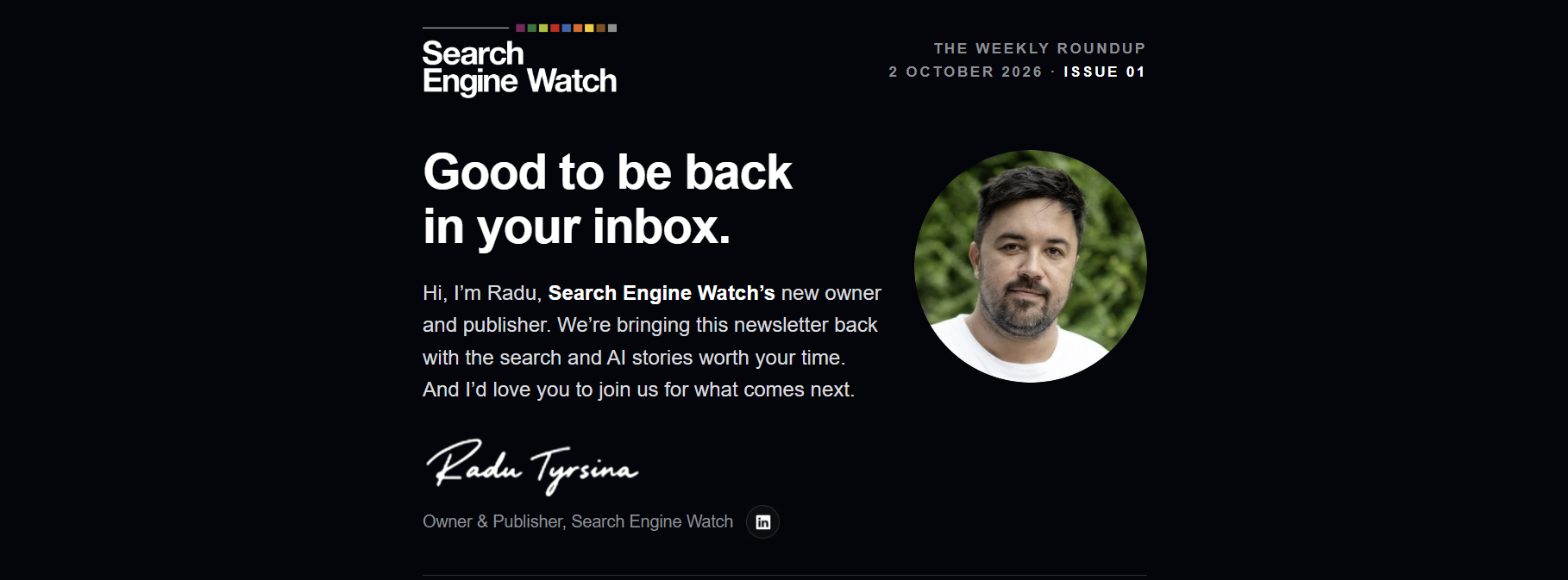
SEO increasingly overlaps with AI discovery, ecommerce, advertising and the tools marketers use every day. Search Engine Watch is expanding its reporting across those subjects, with more stories on SEO and AI search alongside digital marketing and broader AI developments. Subscribe if you want to understand how those changes connect and where they may affect your work next.
Our coverage of Shopify opening checkout to AI shopping agents is one example: discovery matters, but so does what happens when a customer buys. Our reporting on Bing testing an AI Mode tab follows changes closer to the search results themselves. That range is the reason to read SEW.
The Friday Edition will be one part of the newsletter lineup. We plan to publish additional editions and bring original video into the mix, alongside reporting and other useful formats. The aim is to give you both a considered roundup and more ways to follow the stories that deserve attention between editions.
As our products and services launch, subscribers will always receive discounted access, with selected offerings available free. We’re building a growing range of both, and these benefits will roll out alongside them. We’re building them to challenge how the industry works and give marketers more useful options; the newsletter will be a way to hear about them and access subscriber offers.
Best for: Marketers who want a wider view of search and AI, plus access to the SEW products and services as they launch.
What to consider: The additional editions’ schedules are still developing; the planned video and product benefits are forthcoming; and some coverage will extend beyond SEO. If you need a fixed daily search briefing, add SEL or Search Engine Roundtable.
Subscribe through the SEW newsletter form.
2. Search Engine Land: best for a daily SEO and PPC briefing
Search Engine Land’s free daily newsletter is a strong choice when your work spans organic search and paid campaigns. Its current signup page explicitly covers SEO, PPC and developments in search and AI, making it useful for teams that need to follow both sides of search marketing.
The appeal is the combination of news and analysis. The published newsletter offer includes expert advice, search marketing tactics and industry updates, alongside resources such as webinars and buyer’s guides. If a platform change could affect a campaign you’re running this week, that daily cadence is useful.
Best for: Search marketers who need regular visibility into SEO and PPC developments, rather than saving everything for a weekly catch-up.
What to consider: Daily mail creates a more frequent reading commitment. The signup page also describes promotional resource and event emails, so check your preferences if you only want the editorial briefing. Choose SEW for its developing mix of broader reporting and subscriber benefits; choose SEL when a daily search marketing routine is the priority.
3. Search Engine Journal: best for practical guidance alongside SEO and AI search news
SEJ Today, Search Engine Journal’s daily newsletter, suits readers who want to understand a change and find guidance they can apply. Its current signup page emphasizes AI search and SEO news, while the publication’s broader coverage includes technical SEO, local search, paid media and digital marketing.
SEJ’s educational depth is the reason to choose it. Its current site brings together news, guides and practitioner columns such as Ask An SEO and Ask A PPC Expert. Those resources give readers somewhere to go after the headline when they need to work through an implementation question.
Best for: Practitioners building their knowledge while keeping up with the news, particularly when they value explanations and advice across several marketing disciplines.
What to consider: It is a broad daily publication rather than a newsletter devoted to one technical specialty. A narrowly focused resource such as SEO Notebook may be a useful complement. We reviewed SEJ’s current public offer and coverage, rather than testing delivery or assuming every column appears in every email.
4. SEOFOMO: best for a broad Sunday reading list

Aleyda Solis’s SEOFOMO is the pick for readers who want to explore what happened across SEO and AI search, including the resources behind the headlines. Its weekly Sunday edition combines news, guides, tools, jobs and events.
The September 27 edition shows the range: Search Console’s multimodal reporting, Google’s spam update, practical content workflows and AI search measurement all appeared alongside jobs and tools. Each item gives you enough context to decide whether to open the source.
This is a free newsletter for readers who enjoy following the links. It is longer than a quick briefing, and editions include clearly labeled sponsor sections. Choose it when you have time for a proper weekly catch-up and want to discover work from several authors.
5. Core Updates: best for practitioner commentary and tips
Core Updates brings together Mark Williams-Cook’s weekly search news, his SEO tips and the Search with Candour podcast hosted by Jack Chambers-Ward. It offers a convenient way to follow the tips without keeping up with every LinkedIn post.
The September 28 edition covered multimodal reporting, the spam update and query fan-out research. Its news section also linked to SEW’s coverage of Bing testing an AI Mode tab, showing that the selection extends beyond its own material.
Choose it when you want brief news items followed by the judgment of someone working in search. The tips and podcast give it a personal editorial voice; readers seeking a broad directory of jobs, tools and events will find more of that in SEOFOMO.
6. Search Engine Roundtable: best for close tracking of search changes
Barry Schwartz’s Search Engine Roundtable offers a Daily Recap email option, alongside other subscription formats. It is the most natural choice here when your job involves tracking frequent Google changes, search result tests and reports from the search community.
The October 2 recap collected coverage of the September spam update, Google’s guidance on AI-generated content and several search and advertising changes. The format combines a short overview with links to individual stories and wider reading.
Subscribe to the Daily Recap specifically if that is the volume you want. The subscription page distinguishes it from other feeds. This is a good fit for close monitoring; someone who wants to sit down once a week and read a few selected stories may prefer SEW’s Friday Edition or Core Updates.
7. SEOForLunch: best for SEO leadership and execution
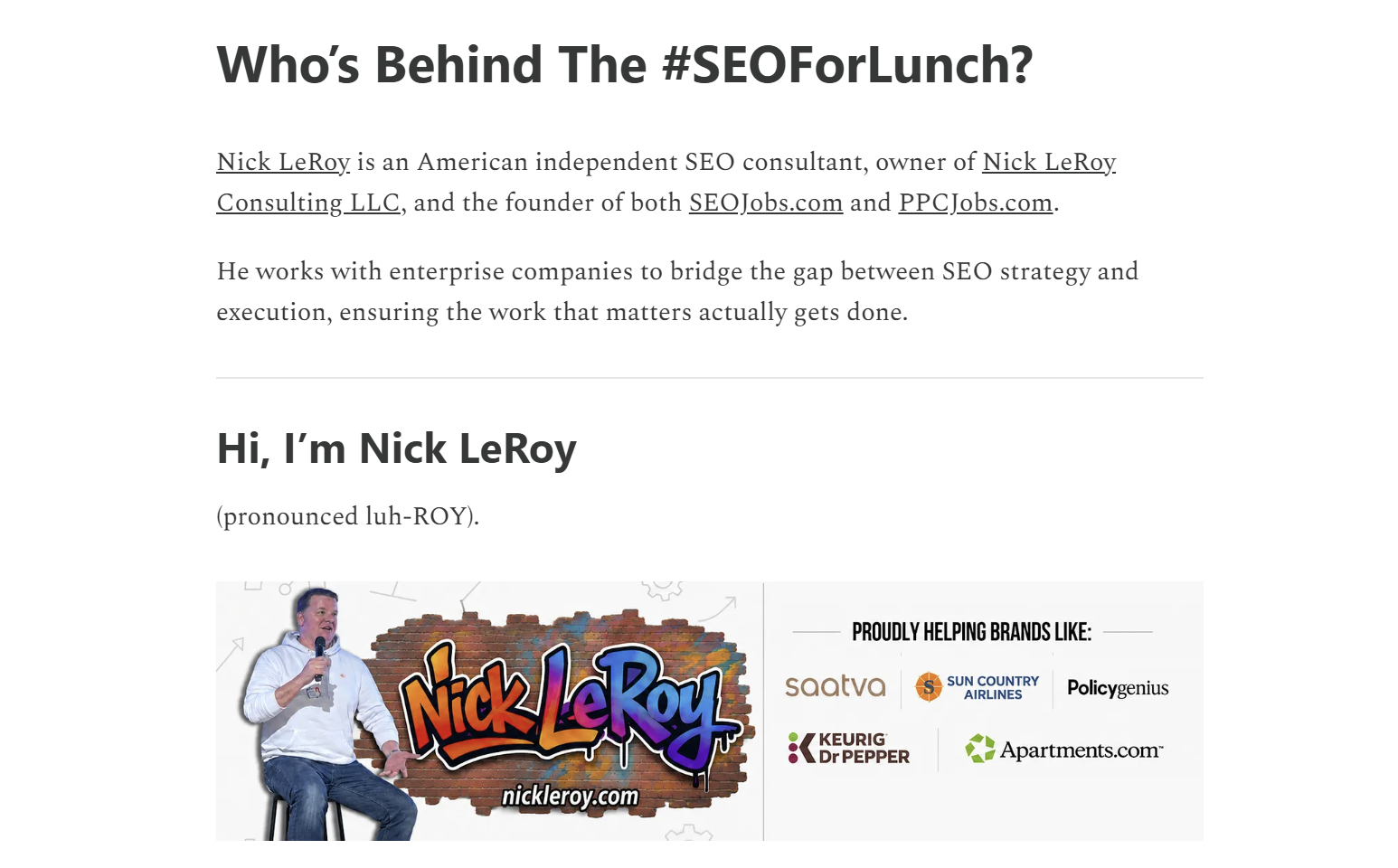
Nick LeRoy’s SEOForLunch now describes itself around what happens inside organizations: ideas that stall, decisions that get avoided and the challenge of turning strategy into execution. It is a free weekly newsletter with a clear personal viewpoint.
Its September archive makes that positioning concrete. Recent subjects included hiring search professionals, accreditation and the changing SEO career playbook. That is a different reason to subscribe from the weekly headline roundup still described in some newsletter lists.
Choose it when your problems involve clients, hiring, leadership or persuading colleagues to act. Readers looking for a steady sequence of technical tutorials should start with a different selection. LeRoy’s commentary earns its place through the organizational questions it asks.
8. SEO Notebook: best for practical tactics and resources
Steve Toth’s SEO Notebook is built around SEO strategies and tactics. Its current signup page promises a free weekly note and a welcome email containing a spreadsheet bundle, including internal linking, click-through rate benchmarking and backlink planning resources.
That makes it a more practical complement to a news digest. You can arrive with a particular task, such as organizing internal links, and explore a resource intended to help with that work. It suits practitioners who would rather spend their reading time on a technique than another recap of the week.
The public signup page explains the offer, but it gives less visibility into recent dated editions than SEOFOMO’s archive. We have verified the published offer rather than tested the subscriber resources or claimed results from using them.
9. WTF is SEO?: best for newsrooms and publishers
WTF is SEO?, written by Jessie Willms and Shelby Blackley, addresses the work of news publishers. Its About page advertises a Monday newsletter for people trying to understand and prioritize search within a publication.
The September 14 edition looked at Google and AI developments through a publishing lens. An earlier September discussion of evergreen content brought in Mark Williams-Cook, Louisa Frahm and Harry Clarkson-Bennett to discuss its role for news organizations.
Choose it when your search decisions involve a newsroom, editorial priorities or a publication’s audience. The examples speak directly to that setting. An ecommerce team may get more relevant day-to-day ideas from SEO Notebook or SEJ’s practical guides.
Which SEO newsletters should you subscribe to?
Give each subscription a job. SEW is our starting recommendation for following the connections between SEO, AI search and wider marketing, with more editions, formats and subscriber benefits planned. Add SEL if your role demands a daily SEO and PPC briefing, or SEJ if practical guidance is the bigger priority.
Then choose one specialist: SEO Notebook for tactics and resources, SEOForLunch for leadership and execution, or WTF is SEO? for publishing. SEOFOMO is a useful Sunday reading list, Core Updates adds practitioner commentary, and Search Engine Roundtable suits close monitoring of search changes. You do not need all nine to stay informed.
Start the conversation by posting the first comment