

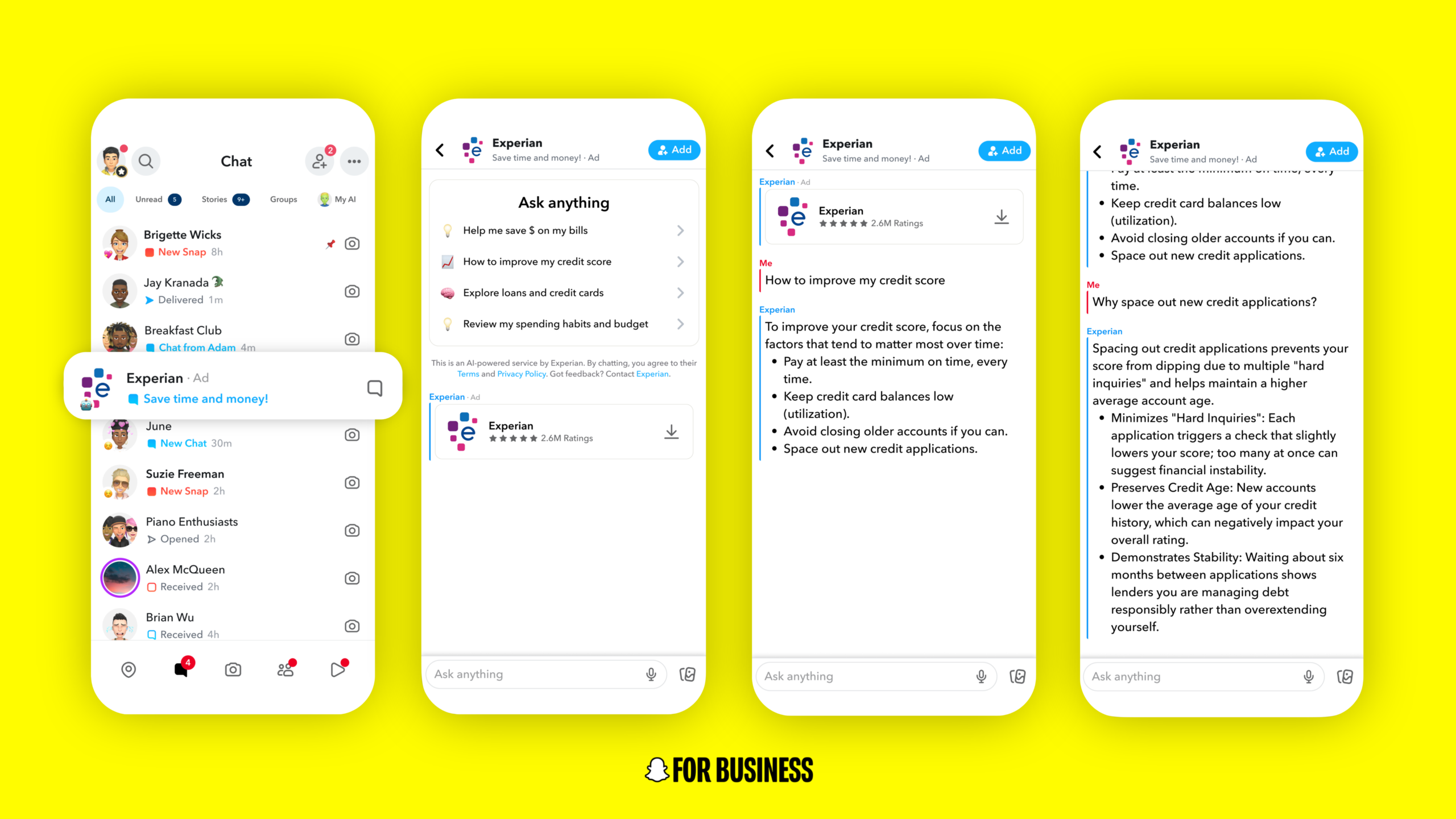
Snapchat’s latest research roundup carries a warning for AI advertisers: 70% of the consumers surveyed considered it intrusive when brands used personal data to create hyper-personalized AI ads. The finding comes from people who already use AI.
Snapchat highlighted the findings on October 22. Ipsos conducted the research for Snap and WPP, asking 4,261 consumers aged 18 to 44 in the US, UK, France, Saudi Arabia and India about their use of the technology.
The full report dates the online fieldwork to April. Respondents used social media daily and had used AI in the previous month; the results describe that selected group, rather than all consumers.
Comfort changes with the job AI is asked to do
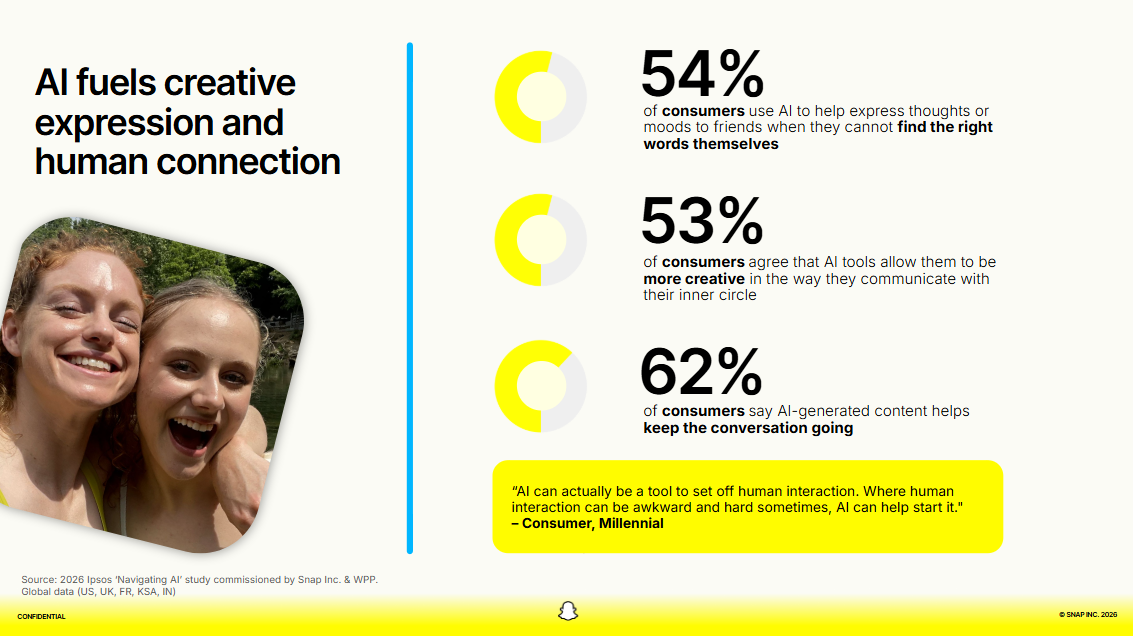
There was considerable enthusiasm for everyday assistance. In the consumer sample, 48% said they used AI daily, while 54% used it to help express thoughts or feelings to friends when they couldn’t find the words themselves.
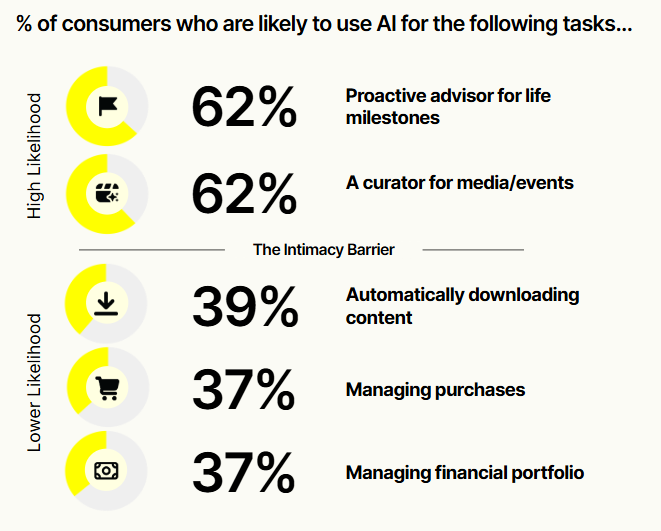
Delegating a purchase drew less interest. Some 62% said they were likely to use AI to curate media or events, compared with 37% for managing purchases. Those are stated preferences, rather than measurements of completed transactions.
Customer service had another clear condition: 68% considered it a deal-breaker if a brand’s AI chatbot could not connect them immediately to a person. That gives brands a specific point to examine when designing a chatbot handoff.
Test the data request alongside the recommendation
For an advertiser building a shopping assistant, the findings suggest testing how much information people will share at each step. A visitor who welcomes help choosing a product may still object to an ad built from personal history.
For example, a gift finder could ask for a budget and the recipient’s interests, explaining how those answers shape its suggestions. Teams could compare variants requesting different details and track completion alongside product selection.
That is a proposed test, not an outcome measured by Ipsos. The survey does not establish which personalization choices increase sales or how respondents actually behave when shown an ad.
Snap sells AI-enabled advertising and uses the research to recommend its own formats. Its advice to offer clear personalization choices can be evaluated separately from those product recommendations.
Source: Snapchat
Start the conversation by posting the first comment