

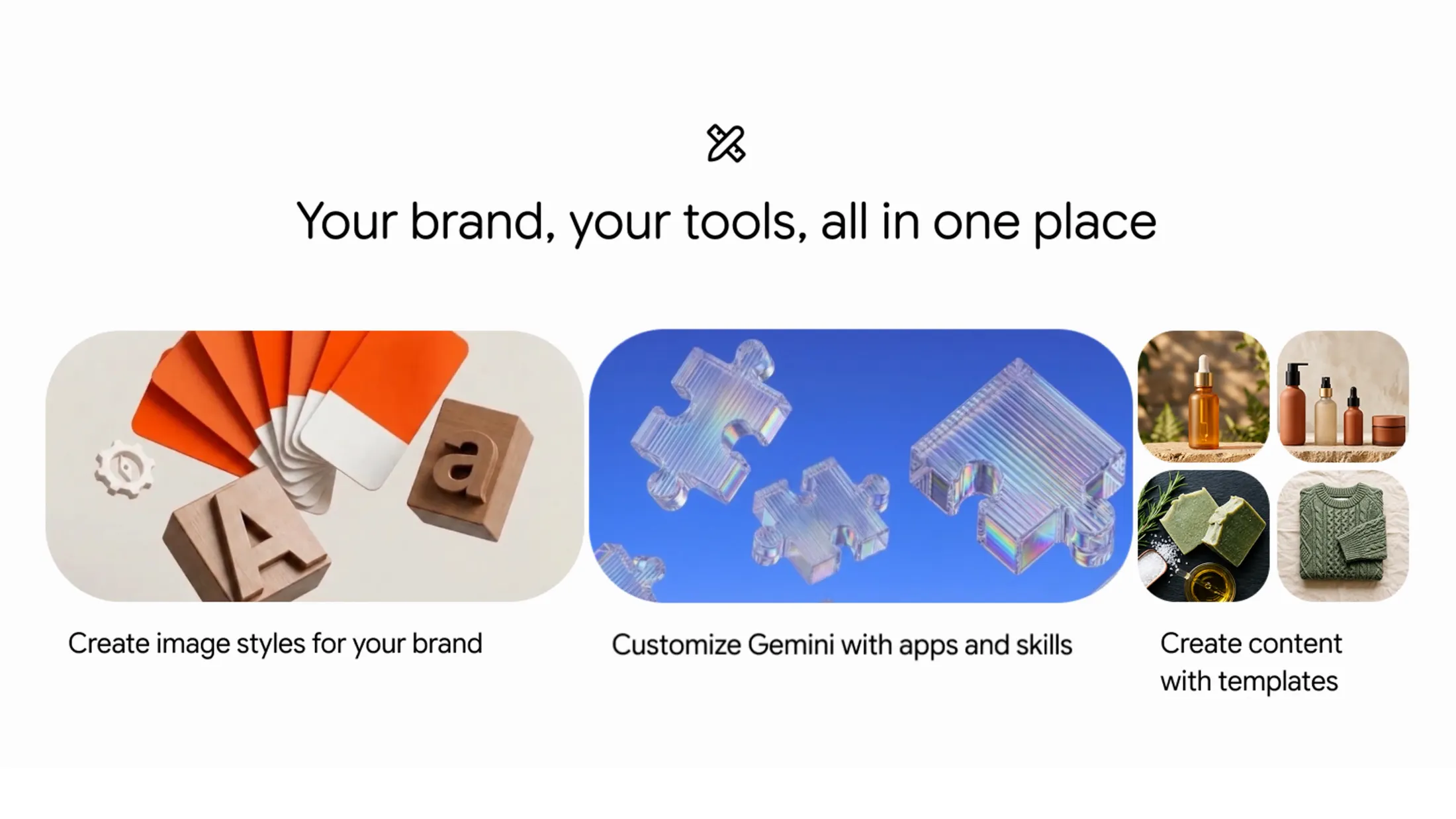
Gemini is getting a small-business landing page that brings brand creation, financial analysis and customer insights into one place. In its October 20 announcement, Google says the hub, marketing and finance skills, and new app connections will begin rolling out globally to all Gemini app users in the coming days.
Owners can upload a website, brand kit, fonts or color palette to define a visual style that Gemini retains for later image generation. The change removes a repeated briefing step for businesses creating assets for successive campaigns.
Saved styling carries across campaign requests
Google says the brand tools use Nano Banana 2.1. The finance capabilities turn spreadsheets, receipts and purchase records into graphics and interactive models, while new connections include Google Ads, Google Business Profile and Workspace, alongside third-party apps.
The announcement names Canva, Shopify and Xero among those services. It gives a global rollout direction, without establishing that every connection or feature is immediately available in an individual account. It also leaves the allowances and third-party subscription requirements for each connection unspecified.
For a business preparing several promotions, keeping the same fonts and colors reduces the amount of material the owner has to supply again. The changing parts of each promotion still need their own instructions: a saved palette cannot supply a new offer’s price or expiration date. Separating those details from the standing brand brief makes it easier to identify what the next asset needs to change.
The Business Profile connection predates this hub
Google announced a direct Google Business Profile connection on June 10. Its examples included analyzing Search impressions and direction requests, drafting responses to reviews, and updating business hours. The initial rollout excluded the EEA and UK.
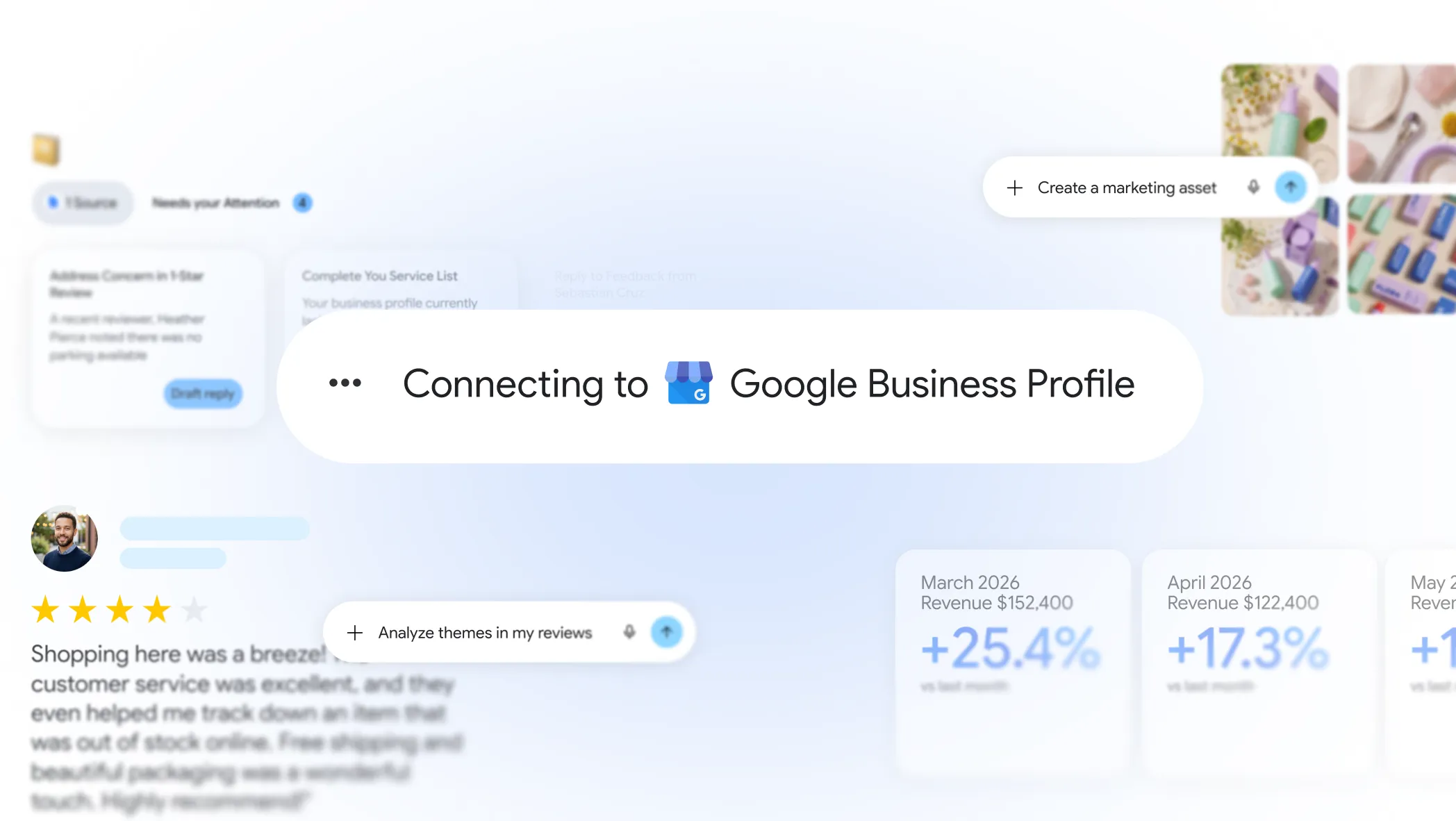
That announcement also introduced Business notebooks, which bring chats, sources, a website and Business Profile context together. Google described alerts about unanswered questions and missing holiday hours, along with recommendations based on the business’s information.
The October announcement gives that work a broader landing page alongside brand and finance tasks. Local marketers should distinguish the new hub from the earlier promise of a Profile connection when explaining what changed to a client.
Google’s new examples include Burger & Butcher, a New Jersey restaurant that the company says uses Gemini to analyze local Search and Maps performance through the owner’s Google Business Profile. Google selected the business for its announcement; the account describes existing work with Gemini.

A common brief connects different marketing jobs
The hub combines material that businesses often prepare separately: brand references for creative work, customer information for messages and records for financial analysis. Bringing those inputs into the same place can reduce the need to reconstruct the business’s context for every task.
SEW’s guide to small-business AI marketing tools explains the separate drafting, design and website-analysis jobs. Access to Google’s new landing page begins with the announced rollout; the relevant app permissions and service entitlements still need checking in the account that will do the work.
Source: Google
Start the conversation by posting the first comment