

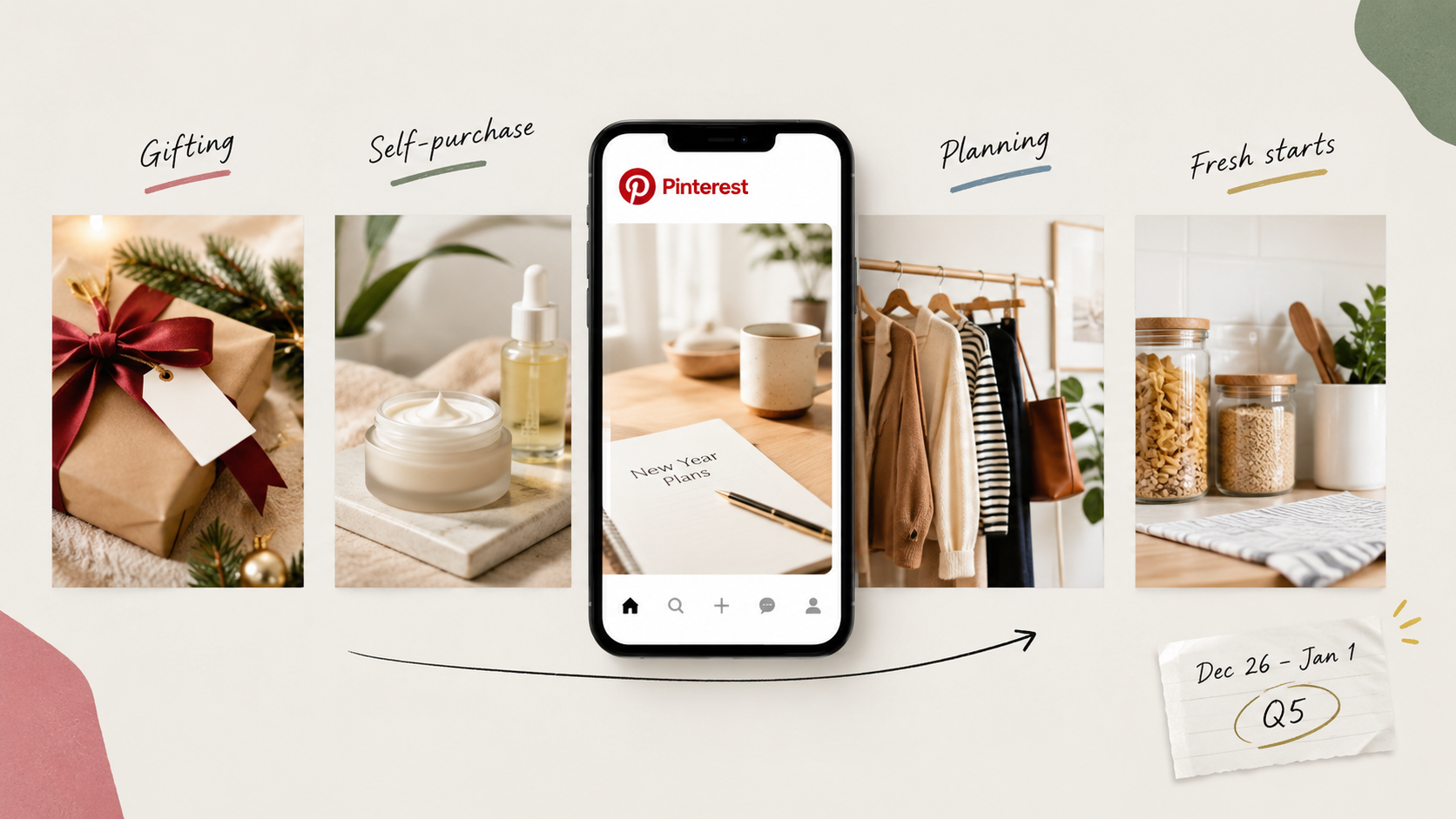
Marketers spend months building toward December 25, then let the account coast through the following week. Pinterest’s latest data suggests the post-Christmas week deserves more attention. It can be an awkward transition but the hype is not yet over.
In Pinterest’s data, 55% of weekly Pinterest users continued buying online between December 26 and 31, while 45% continued buying in-store. Pinterest also said searches reach one of their highest peaks of the year during Q5.
What is Q5 marketing?
Q5 is Pinterest’s term for the period immediately after Christmas and before the new year begins. Pinterest uses the term to describe a distinct consumer moment when the context around shopping changes.
This makes marketing in Q5 different because brands have a short window to capture continued shopping activity without launching entirely new products.
In fact, Pinterest reported that one in two monthly Pinterest users continues shopping in the weeks following the festive season, but the reason for shopping changes.
Repositioning existing inventory around post-holiday routines could sustain the momentum since the shopper is still there, but the intent has changed.
For marketers, the useful question is how to respond to that change in intent. The product may be exactly the same, but the reason someone might want it has changed.
- Gifting to self-purchase – People spend weeks buying for others. Brands can shift the message back toward the shopper. A skincare brand, for example, could take a Christmas gift-set image and reframe it around a January self-care routine.
- Celebration to planning – The aim isn’t to erase Christmas overnight. Instead, brands can move from festive occasions toward the routines and preparation associated with January. A clothing brand, for example, could replace Christmas-party looks with simple outfits for returning to work or starting the new year.
- Urgency to utility – Holiday sales often rely on deadline language such as order by or last chance. After Christmas, brands can instead demonstrate how the product solves an everyday problem. A kitchenware brand could replace “Last chance to get 50% off” with content focused on organisation and everyday essentials for the new year.
A Q5 campaign calendar for December 26–January 1
Pinterest’s guidance can be turned into a simple three-stage campaign plan.
| Date | Creative focus | Example message |
|---|---|---|
| Dec. 26–27 | Self-purchase and post-Christmas comfort | Time to focus on you. Give your skin the reset it needs |
| Dec. 28–30 | Planning and preparation | Get ready for January with these easy-to-slip into dresses |
| Dec. 31–Jan. 1 | Fresh starts and action | Start the year clutter-free with our must-have storage solutions to organize your kitchen |
This is a practical framework based on Pinterest’s recommendations, rather than a calendar published by Pinterest.
The point of spreading it across specific days, rather than running one static post-holiday creative, is that the self-purchase, celebration-to-planning and urgency-to-utility shifts don’t all land on December 26, they move at different speeds across the week.
Key takeaway
The practical lesson is not to build a second Christmas campaign. It is to plan the handoff. Before December 25, identify the products and creative assets that can survive the change in context. Then prepare three versions of the message:
- Christmas: Why should I buy this for someone else?
- Post-Christmas: Why might I buy this for myself?
- New Year: How does this help me start something new?
Pinterest’s shopping figures are platform-specific, so marketers should not assume they describe the entire retail market.
The useful next step is to compare them with your own data: look at site searches, landing-page traffic, product views and conversions from December 26 through January 1, then compare that period with the weeks before Christmas.
If enough data points to post-holiday intent, you have a clear baseline to build a dedicated Q5 strategy. The product may not change between December 25 and January 1. The reason to buy it can.
Start the conversation by posting the first comment