

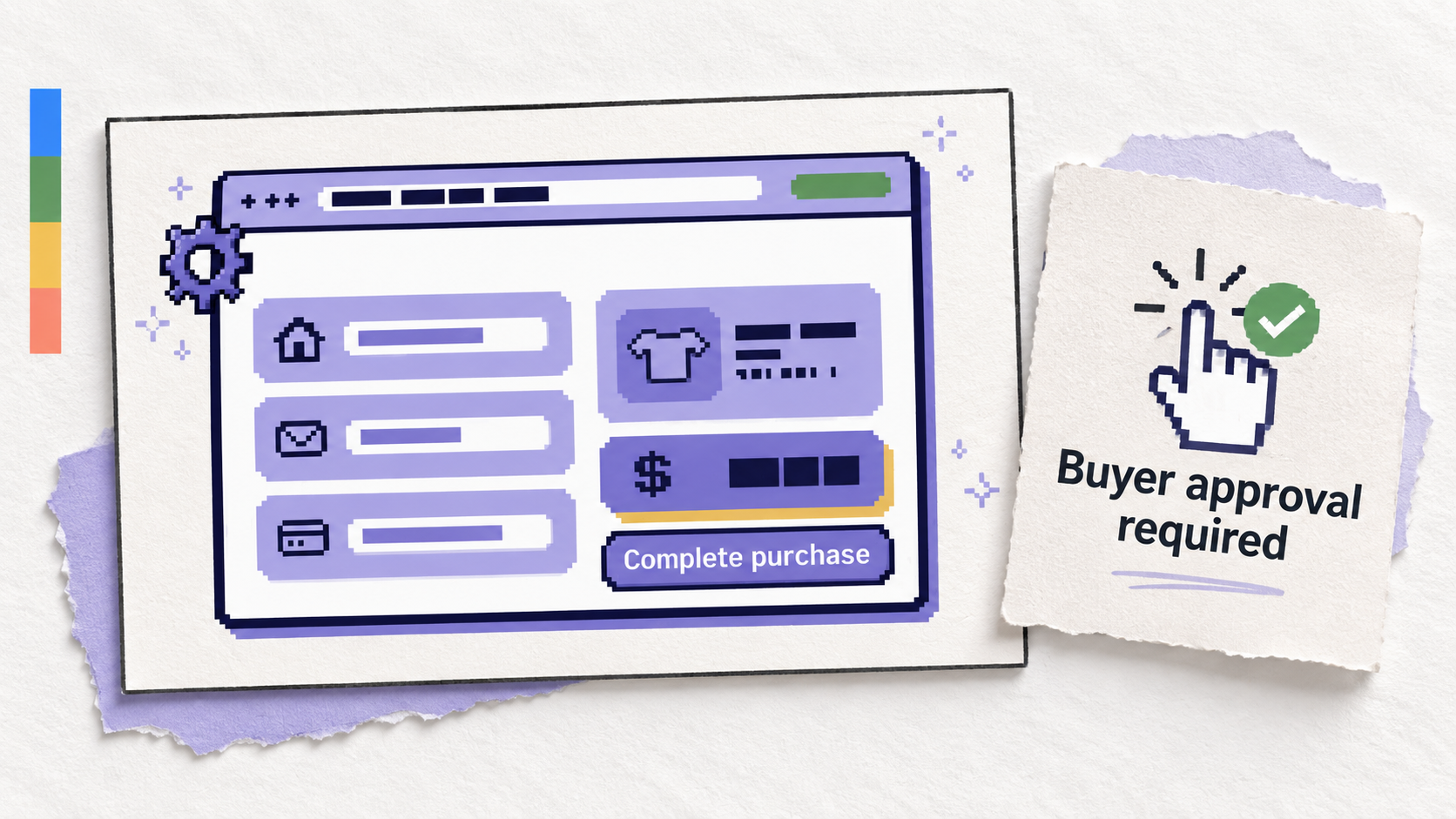
What an agent can do at checkout
The four tools cover returning to the storefront, reading checkout information, updating supported fields and submitting the purchase. An agent can also retrieve order details after checkout is complete.
Shopify’s documentation describes updates to contact details, shipping choices, discount codes and supported payment selections. The tools cannot accept new card details. Payment flows include saved Shop Pay cards and Shop Pay approvals, while shoppers handle other payment methods on the checkout page.
Before submitting an order, the agent must show the buyer the current order and total and obtain permission. If the total changes, it must ask again. Authentication steps such as 3D Secure, and checkout extensions that require buyer interaction, return control to the shopper.
WebMCP gives agents specific actions to call
WebMCP lets a webpage expose structured tools to a browser agent. That gives the assistant defined actions, rather than requiring it to work out which buttons and fields to use from the page.
Google opened a WebMCP origin trial in Chrome 149 in June. Origin trials let developers test experimental browser features with live applications; the underlying APIs remain subject to development.
Shopify’s August 5 storefront announcement already covered product searches, cart changes and navigation to checkout. It described availability on Liquid storefronts and the Hydrogen developer preview, with agent support limited to Chromium-based browsers through an origin trial.
The September addition supplies tools for working within checkout itself. Actual use still depends on an agent and browser that support WebMCP.
Our take: agent-assisted purchases can stay on the store
For merchants, the important design choice is where the transaction happens. The assistant acts on the checkout already open in the shopper’s tab, with the buyer able to see the order and take over when necessary.
That offers another route alongside the native checkout experience SEW recently covered on Google, where eligible purchases can happen within Google. Shopify’s browser tools let an assistant help finish a purchase on the merchant’s existing checkout page.
Agent developers still need to consider access. Shopify recommends signing browser requests with Web Bot Auth and registering the agent’s keys; requests without it may be deprioritized or blocked by bot detection.
Shopify has documented the transaction mechanism, but its announcement includes no adoption figures or conversion results.
Start the conversation by posting the first comment