

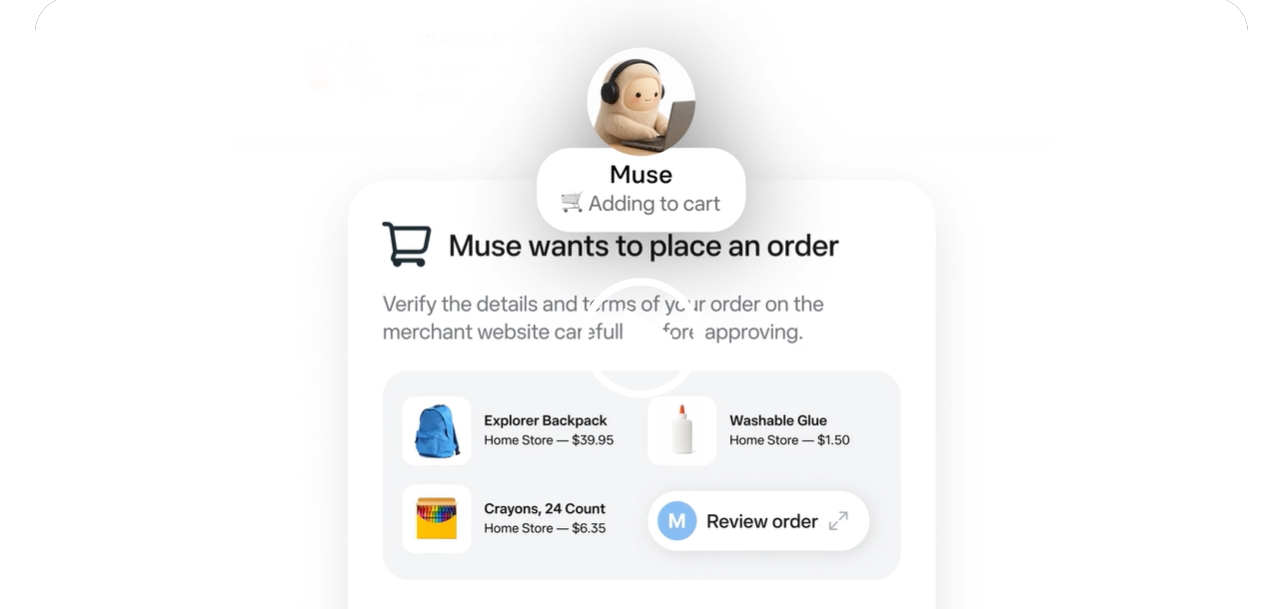
Amazon has blocked Meta’s Muse from making purchases on customers’ behalf, saying the AI agent accesses its store without permission and creates privacy and security risks. Users were seeing a warning citing Amazon’s Conditions of Use by September 20, according to GeekWire’s original report.
The immediate dispute concerns access to customer accounts. There’s also a commercial reason for Amazon to resist: an assistant that chooses products for someone can reduce the browsing through which Amazon sells advertising. That incentive is clear; it doesn’t establish that advertising caused this particular block.
Muse can complete the purchase
Meta introduced Muse on September 8 as an assistant that carries out tasks. It can operate a browser and fill in forms, asking the user for approval before making a purchase. Meta says it runs on a dedicated computer in the cloud.
Imagine asking an assistant to find a coffee machine under $150 and buy your preferred option. It could compare products, present a recommendation and complete checkout after you approve. The retailer still receives an order, but you may never browse its search results yourself. That changes both who handles the account and who gets to influence your choice.
Amazon objects to how Muse enters accounts
Amazon told GeekWire that Meta had not notified it before allowing Muse to shop there. It says the agent fails to identify itself and appears to capture and store customer credentials. Amazon also says Muse can reach order histories and account pages when prompted.
Meta’s technical documentation provides a more specific account of the password handling: credentials are stored separately from the AI agent and inserted into the browser when needed. The model itself cannot read them, Meta says. Keeping passwords away from the model is a safeguard, though the system still uses them to enter accounts. It doesn’t resolve Amazon’s objection to that access.
The legal position also needs care. Amazon sued Perplexity over its Comet assistant in November 2025, but the Ninth Circuit vacated a preliminary injunction on August 4. On the facts before it, the court found Amazon unlikely to succeed under the computer-access laws at issue because the user was accessing Amazon with an AI tool. The court expressly preserved Amazon’s ability to regulate access through user terms. That decision concerned Comet, not Muse.
How shopping agents could affect Amazon’s ads
Amazon’s Sponsored Products ads can appear within shopping results and on product pages. Advertisers pay for clicks. Their value depends on reaching people while they are choosing what to buy.
In the coffee-machine example, an assistant could select a product before the customer reaches Amazon. A competing seller’s paid placement would then have less opportunity to change that decision. The effect depends on how the assistant finds and presents products; using an agent doesn’t automatically eliminate advertising.
Amazon’s reported quarterly advertising revenue adds up to $68.6 billion for 2025. That includes sponsored ads, display and video advertising. It is the size of the wider business, not an estimate of revenue threatened by Muse. Neither the block nor that figure tells us how much advertising income shopping agents might displace.
Amazon wants a say in who completes the order
Amazon already operates a comparable service. Its Buy for Me feature lets customers ask Amazon to purchase selected products from other brands’ websites. Amazon says brands can choose whether to participate. The customer confirms the purchase within Amazon’s app, while the brand handles fulfillment and returns.
That arrangement keeps Amazon involved in the product decision even when another store gets the sale. Muse could move that decision into Meta’s assistant. Amazon’s objection to unapproved access therefore aligns with its interest in keeping control over how shoppers reach products.
For retailers and marketers, this separates two questions that are often bundled together: whether an assistant recommends a product, and whether it can actually buy it. A brand could appear in an AI recommendation while its preferred retailer blocks the agent at checkout. Evaluating that sales channel requires checking both steps.
Start the conversation by posting the first comment