

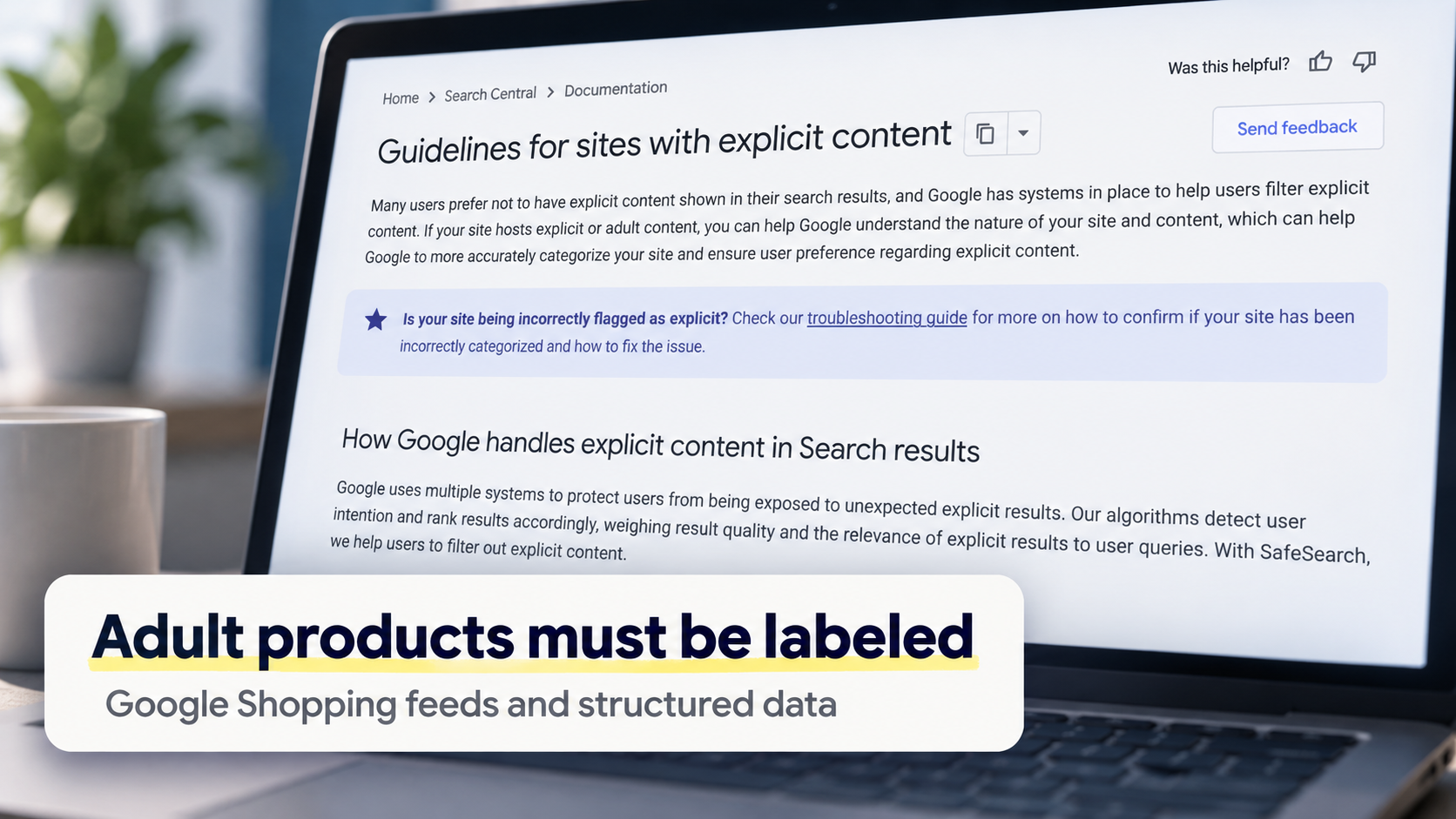
Google has updated its guidance for sites containing explicit content with a fairly straightforward request for ecommerce merchants: if you’re selling adult products, tell Google.
The company says merchants should identify adult-oriented products using the adult attribute in Merchant Center or the hasAdultConsideration property in Product structured data.
The labeling affects how products are handled across Google Shopping features. Google specifically says it does not affect the product page’s visibility in organic Search results.
That’s an important distinction. Marking a product as adult isn’t some new SEO scarlet letter. It gives Google the information it needs to apply the appropriate Shopping restrictions based on things such as age and country.
The label itself isn’t new
Google already had an adult attribute for Merchant Center feeds.
It also added hasAdultConsideration support to Product structured data in May 2026, giving merchants another way to explicitly identify products intended for adult audiences.
What’s changed now is the documentation.
Google has added the instruction directly to its Search Central guidance for explicit-content sites, making it rather harder for ecommerce operators to claim they didn’t know.
For stores with mixed inventories, Google recommends identifying the relevant products individually rather than treating the entire business as adult-oriented.
Our take
There isn’t much mystery here.
If Google Shopping needs to decide whether a product should be restricted by age or location, telling it what you’re selling is preferable to asking an algorithm to inspect the merchandise and reach its own conclusions.
And, importantly for SEOs, Google is explicitly separating that classification from ordinary organic Search visibility.
Source: Search Engine Roundtable
Start the conversation by posting the first comment