

For one business that can ask customers and reply manually, I’d start with Google Business Profile, which provides review links, QR codes and replies for free. NiceJob is the paid option I’d shortlist when requests need to follow completed jobs automatically; BrightLocal Grow is my first stop when several locations also need local SEO reporting.
As a publisher, I’m interested in which recurring task a subscription takes off the team’s hands and how the bill changes when a business adds locations. A product that sends the request after a completed job solves a different problem from one that helps a manager answer reviews across ten branches.
| Tool | The need it addresses | Published price or billing basis | The detail that changes the choice |
|---|---|---|---|
| Google Business Profile | Manual requests and replies for an eligible business | Free | You handle the customer follow-up yourself. |
| BrightLocal Grow | Reviews alongside local rankings and listings | $65/month for one location, or $584/year | SMS credits cost extra; the cheaper Track and Manage plans omit Reputation Manager. |
| NiceJob | Review invitations triggered by service and customer activity | Starter: $75/month; Pro: $125/month | AI Replies sits in Pro, so request automation and reply automation have different prices. |
| Localo | Google review replies within guided profile optimization | Single Business: displayed at $39/month, billed annually, plus VAT | You review and submit the AI reply; the portfolio Reviews manager is a Pro feature. |
| GatherUp | Requests, replies, surveys and feedback analysis | $99/month for one location; $60/location/month for 2–10 | Its published allowance is up to 300 SMS and 3,000 email credits per location per month. |
| GMBapi | Review and reply-status monitoring across a location portfolio | Essential uses volume-based pricing; check the location selector | A dedicated review-solicitation module and additional review networks require separate scoping. |
This is a documentation-based shortlist, checked against public pricing, help pages and supplied product imagery on October 5, 2026. We have not run a comparative account test. The order moves from the free workflow to different paid needs, rather than assigning performance scores.
1. Google Business Profile handles the basics for free
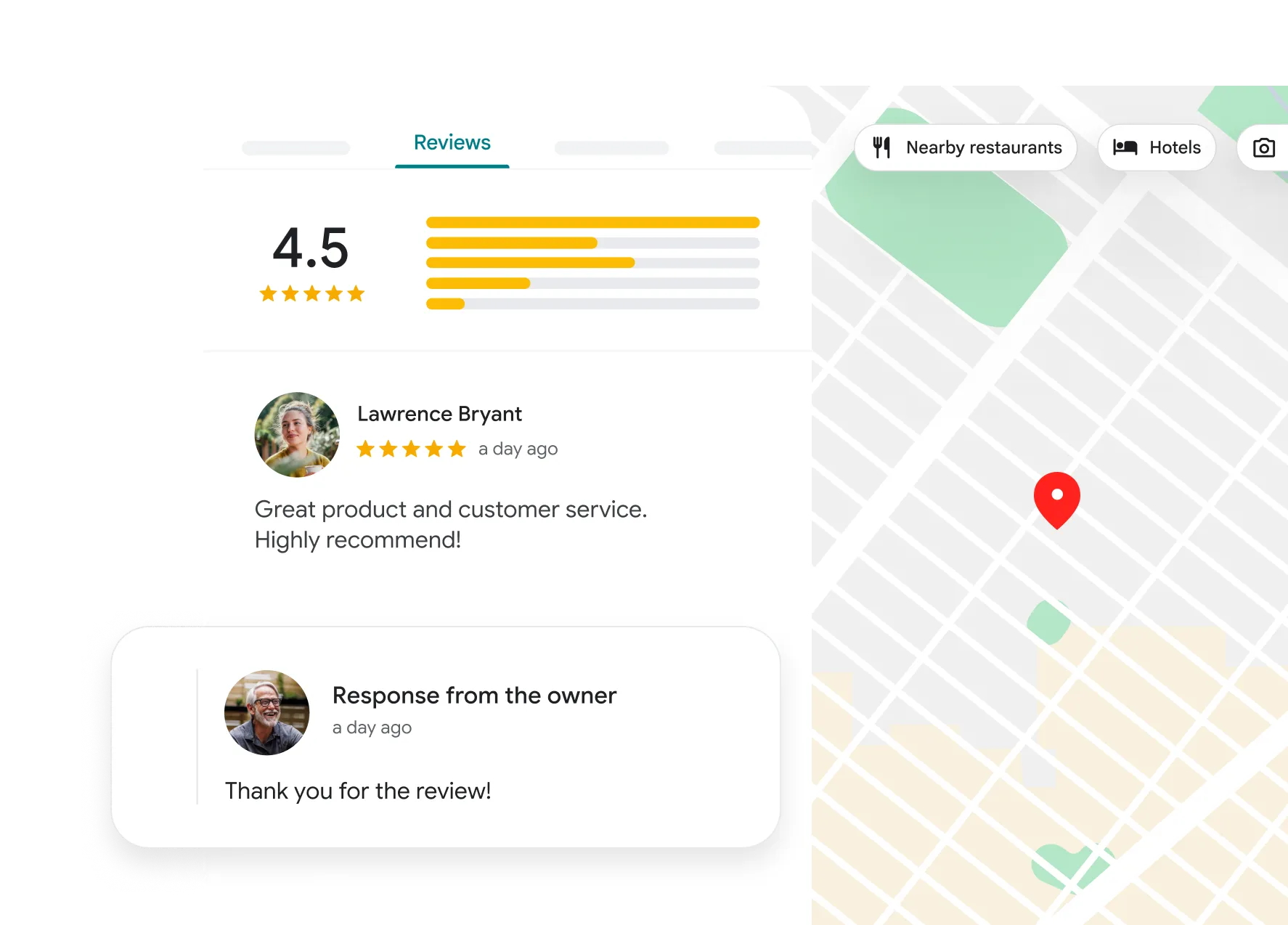
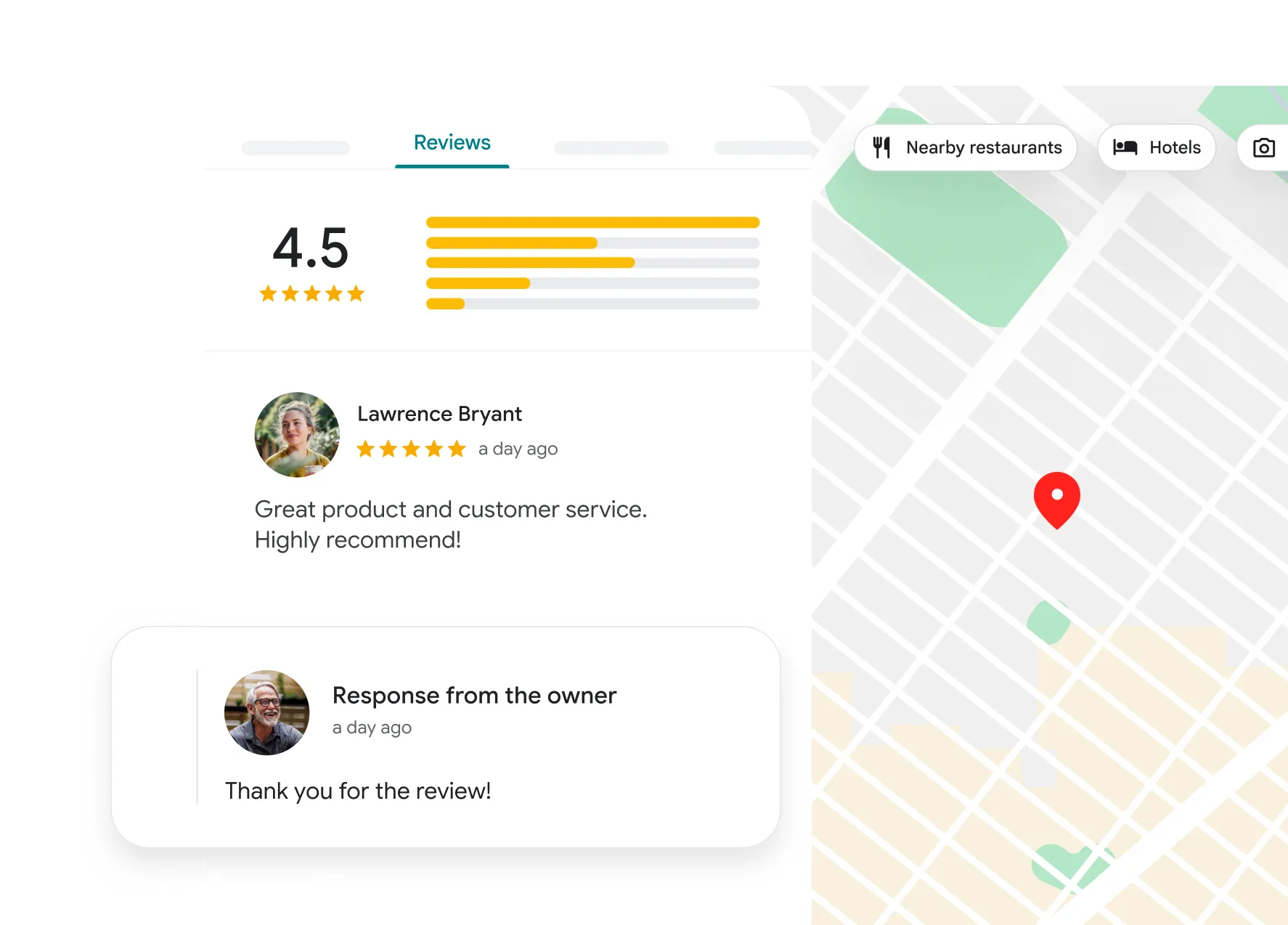
Google Business Profile is the right first choice when an owner or staff member can keep up with review requests and responses. Google lets you create a direct review link or QR code and reply to reviews after the business is verified. You can manage the profile through Google Search and Maps.
A practical free workflow is to include the review link in the follow-up email you already send after a genuine customer interaction, put the QR code on a suitable receipt or customer handout, and set a regular time to read and answer incoming reviews. Google’s review-request guidance covers both links and QR codes.
The work becomes harder when staff need reminders to send invitations or a manager must coordinate responses across several branches. That is where the paid products below add something concrete: customer-system triggers, consolidated queues and reporting.
Keep the invitation independent of the customer’s satisfaction score. Sending the Google link only to people who first choose four or five stars in a private feedback form selectively solicits positive reviews, which Google prohibits. Discounts or gifts in exchange for reviews are also prohibited.
2. BrightLocal combines review management with local SEO
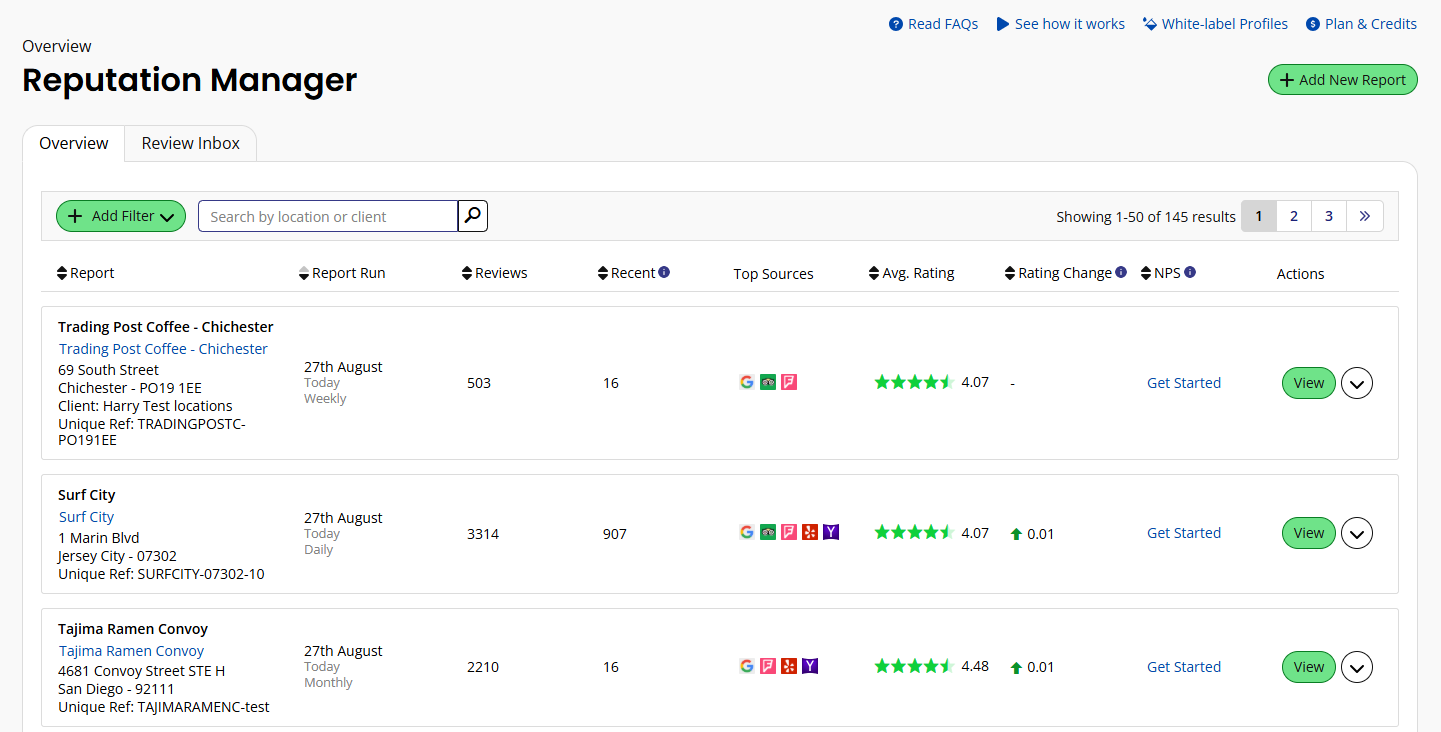
BrightLocal makes the most sense when the person handling reviews also manages local rankings and business listings. Its Reputation Manager brings review monitoring, requests and website review widgets into the wider local SEO platform. You can reply to Google and Facebook reviews inside BrightLocal; for other monitored sites, it provides a link to respond on the original platform.
The location overview is particularly relevant to an agency or a business with several branches. It shows review totals, recent reviews, sources, average ratings and rating changes by report, helping the team see which locations deserve attention without opening every profile.
Review management requires the Grow plan. The current pricing table lists $65 per month for one location or $584 billed annually. Track and Manage cost less, but exclude Reputation Manager.
Budget for texts separately. SMS credits cost $0.05 each; a US or Canadian SMS uses one credit and a UK SMS uses two. As a recurring-cost example, 200 US SMS messages cost $10 in credits, bringing a single-location monthly Grow subscription plus those messages to $75. Follow-ups add to the message count.
I’d choose BrightLocal when its rankings, listings and review reports would all be used. For a business that only needs somebody to answer the occasional Google review, the free profile workflow is easier to justify.
3. NiceJob sends review requests when the job is finished
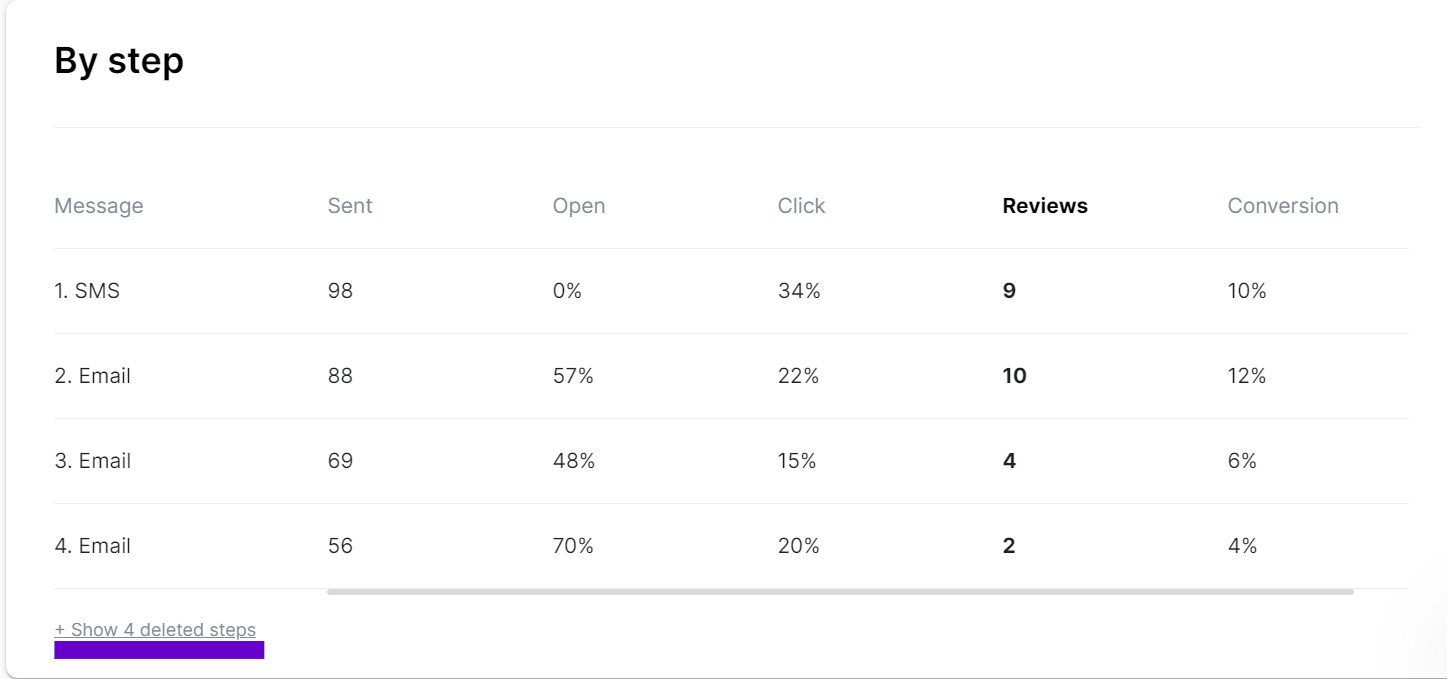
NiceJob belongs on the shortlist for service businesses whose review requests depend on a busy team remembering what happened after each job. Its integrations can enroll customers in a campaign when a job is completed or an invoice is paid. Its help documentation names Jobber, Housecall Pro and QuickBooks among the connected systems.
The campaign workflow combines SMS and timed email follow-ups. NiceJob also tries to match incoming reviews to enrolled customers and stop future reminders once a review is detected.
Starter costs $75 per month and includes review requests, website review widgets and social sharing. Pro costs $125 per month and adds AI Replies alongside other customer-marketing features. An owner choosing the $75 plan for request automation should keep the extra $50 in mind if automated replies are also essential.
NiceJob’s campaign reporting documentation identifies a useful measurement limit: its total counts reviews matched to enrolled customers. A customer reviewing under a different name may fail to match. Read that figure as campaign-attributed activity when comparing it with the full Google review count.
Before choosing NiceJob, check the trigger supported by your own customer system. A job-completion integration fits the service workflow much better than repeatedly exporting a contact list by hand.
4. Localo keeps a person in charge of AI replies
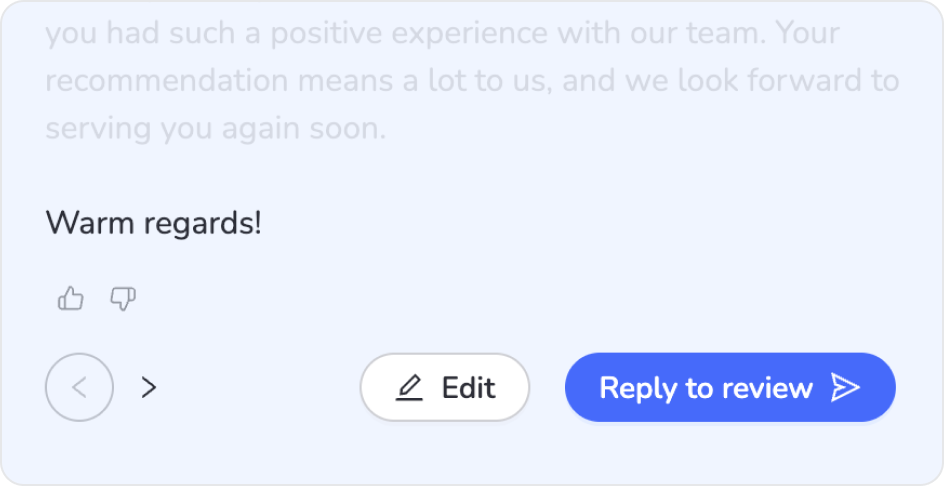
Localo is worth considering when an owner wants help with Google Business Profile optimization and faster review responses in the same tool. Its review features let you filter reviews awaiting a reply, use templates, generate an AI suggestion and edit the response before publishing.
Localo’s help documentation says AI-generated responses are not automatically published. You can check whether a draft accurately addresses the customer’s complaint, edit the wording and then submit it. The supplied product image shows separate Edit and Reply to review controls.
The Single Business plan is displayed at $39 per month with annual billing, plus VAT, for one profile. It combines review handling with guided tasks, profile work and local visibility features. The consolidated Reviews manager for multiple profiles belongs to Pro, so the single-business price should not be treated as an agency portfolio price.
I’d put Localo ahead of a standalone reply generator when the owner also needs a recurring plan for improving the profile. Google Business Profile already lets you answer reviews for free; Localo’s additional appeal is the assistance and surrounding optimization work. SEW’s guide to free AI SEO tools for small businesses explains how profile management fits beside website analysis.
5. GatherUp connects review requests with customer feedback
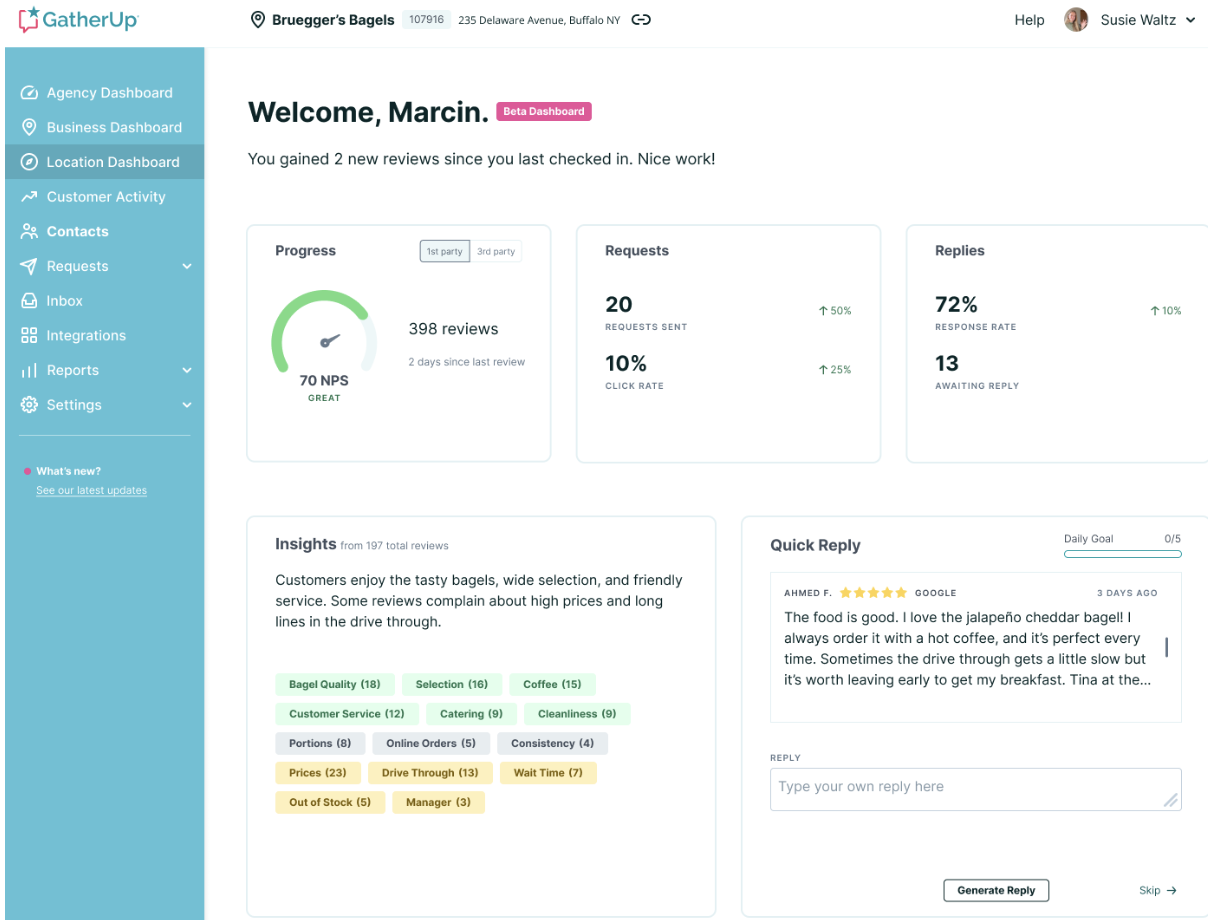
GatherUp is the option I’d examine when a business wants to investigate customer experience as well as collect public reviews. Its published plans combine review requests and in-app responses with surveys, Net Promoter Score, reporting and AI-driven topic tagging.
For an illustrative restaurant group, the feedback themes could help a manager investigate repeated service or waiting-time complaints across branches while the team handles its public Google review responses in the same platform.
GatherUp lists $99 per month for one location, or $60 per location per month for two to ten locations. All plans list up to 300 SMS and 3,000 email credits per location per month. Listings Hub is a separate add-on, published at $40 per location per month.
For new buyers comparing older roundups, there is also a duplication to catch. Grade.us now directs new trial requests to GatherUp, describing it as its next-generation offering. I would evaluate that route as GatherUp rather than give both names separate places in a new shortlist.
6. GMBapi monitors reviews and reply status across locations
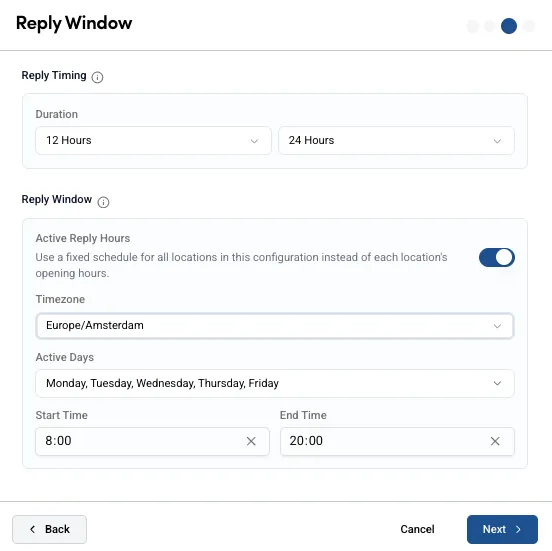
GMBapi deserves consideration when a team needs to know which reviews disappeared, which replies were rejected and which branches still have unanswered feedback. Its published feature set includes deleted-review monitoring, reply status, a shared review feed and configurable reply automation.
GMBapi says its reply agent can use an approval flow and stand down when a team member has already responded. Its supplied Reply Window screen shows controls for timing, active days and allowed hours, giving a portfolio team settings for when automated responses can be posted.
The Essential package includes reputation management and uses volume-based pricing. The public selector showed a starting rate of $11.50 per location per month with the 11–50 location band selected during our check. That is a volume example; configure your own location count before comparing it with a single-business subscription.
Review acquisition needs a separate check. The company offers direct review links and says it can scope a dedicated solicitation module. Monitoring and replying in the core package should therefore be compared separately from buying an SMS and email request service. Additional review networks beyond Google are also scoped separately.
How the bill changes across five locations
For an illustrative five-location business, the published monthly rates produce a substantial difference. BrightLocal Grow’s two-to-five-location band is $87 in total before SMS credits, or $17.40 per location. GatherUp’s two-to-ten-location rate is $60 per location, totaling $300 per month for five locations.
| Five-location example | Monthly subscription total | What changes the comparison |
|---|---|---|
| BrightLocal Grow | $87 | Local SEO tools included; SMS credits purchased separately. |
| GatherUp | $300 | Feedback and survey features; published SMS and email allowances per location. |
These are subscription calculations from the BrightLocal and GatherUp pricing pages, using monthly billing and excluding taxes and additional services. They compare the same location count, while the two packages cover different work.
For a business that wants local rankings, listings and Google review handling, I’d examine BrightLocal Grow first. For a team running a customer-feedback and survey program, GatherUp’s broader feedback features deserve the comparison. An owner handling one profile and a manageable stream of reviews can keep the Google link in the existing follow-up email and spend nothing on another subscription.
Start the conversation by posting the first comment