


Google has announced Agent Compute Engine, a service that gives AI agents hardware-isolated virtual computers. Customer preview access will arrive in the coming months; Google says the infrastructure already powers Gemini’s work-task agents.
The October 22 announcement describes small virtual machines, or microVMs, with their own operating-system environments. Agents can use them to execute code, operate browsers and maintain workspaces across sessions.
Idle agents keep their work between tasks
Google’s technical explanation separates the software that chooses an agent’s next action from the sandbox that runs its commands. This lets the system detect when execution has stopped.
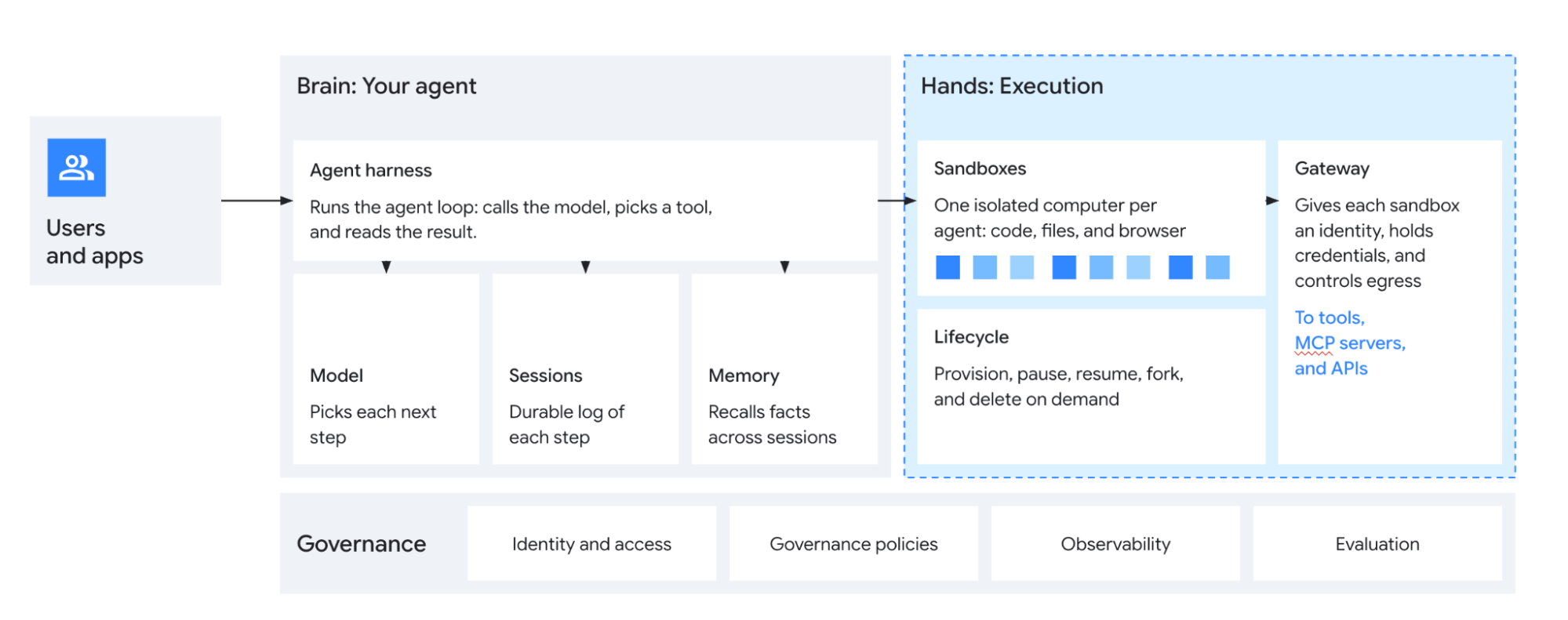
When an agent waits for a model response, user input or another system, its microVM can pause. A saved snapshot preserves the state for its next action, rather than rebuilding the working environment or continuously allocating active compute.
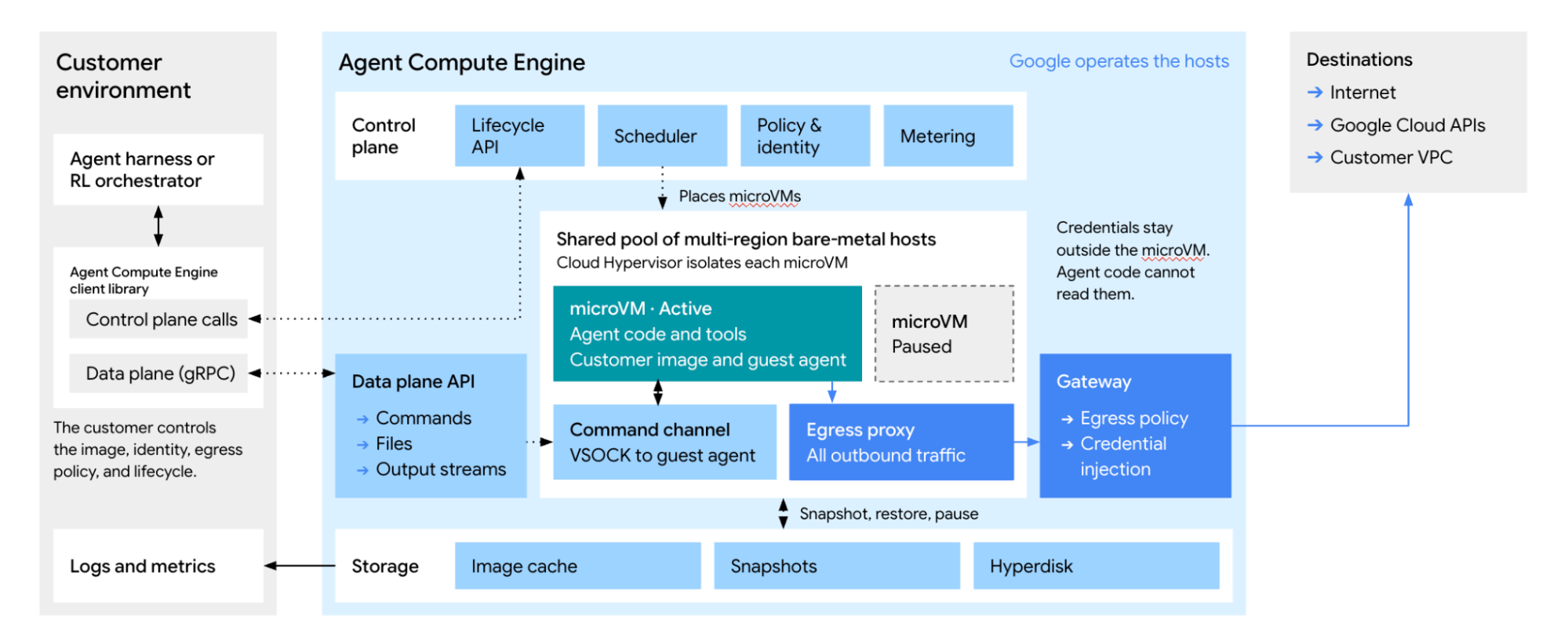
Copy-on-write memory sharing also lets agents share unchanged operating-system and software components. Separate memory is allocated for the portions each agent modifies, reducing duplication across environments.
Service credentials stay outside the sandbox
Google keeps long-lived credentials outside the execution environment. An external gateway checks the agent’s identity and outbound-access policies before inserting the credential needed for a permitted service request.
That design limits what hostile code inside a sandbox can steal: a compromised environment should not contain the user’s stored API keys or OAuth refresh tokens. Access to external services still depends on the gateway’s configured policies.
Source: Google Cloud
Start the conversation by posting the first comment