

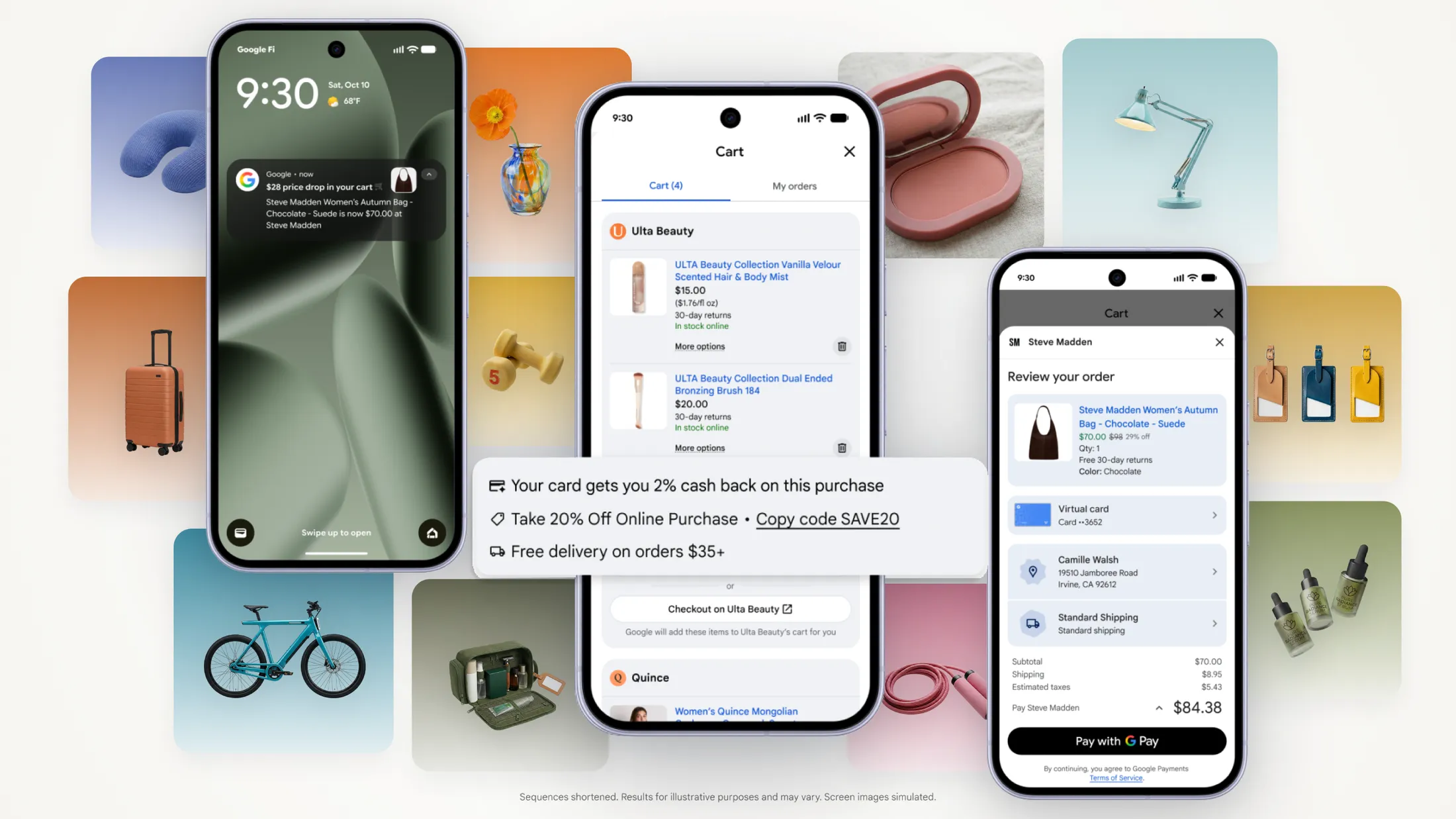
Google has begun rolling out Universal Cart in the U.S., letting shoppers save products from different retailers in one place across Search and the Gemini app. They can leave their shopping unfinished and get an alert when something becomes cheaper or comes back into stock.
For stores, Universal Cart gives Google a way to bring an undecided customer back before the retailer has an order. Price and restock alerts can do that even when the shopper hasn’t visited the merchant’s website.
Google can keep watching after you stop shopping
Google previewed Universal Cart in May as a shopping list that could work in the background. The October launch brings that idea into a shared cart across Search and Gemini, with price and inventory alerts, relevant promotional codes and help choosing a payment card based on its benefits.
Imagine putting together a birthday shopping list from several shops. You can save the choices without committing to an order, then return when an alert tells you a present has dropped in price. Google keeps the list and supplies the reminder, giving you less reason to reopen each store’s website just to check.
Stores still handle the order and customer support
Shoppers can pay through Google Pay within the cart at supported merchants, or transfer items to the retailer’s cart to finish on its website. Google names Nike, Sephora, Target, Ulta Beauty, Walmart, Wayfair and Shopify merchants among those offering these checkout experiences.
The checkout connections use the Universal Commerce Protocol, or UCP. Google says retailers remain the merchants of record, retain their customer data and own the post-purchase relationship. Customers receive their confirmations and support from the retailer.
Buying inside Google was already possible through Native Checkout’s expansion, which SEW covered in September. Universal Cart gives shoppers somewhere to collect and revisit purchases before they reach that point.
The next customer visit is where retailers should look
Google’s UCP FAQ says merchants own the transaction data, while standard privacy and consent practices apply to remarketing. The document describes an explicit marketing opt-in during checkout as a planned feature.
That leaves retailers with a concrete question about repeat business: after a Google-assisted purchase, does the customer buy from the store directly next time? Google’s reminders could help a retailer complete an order that would otherwise have been forgotten. They could also encourage shoppers to keep using Google as their shopping list. The launch announcement provides no merchant results to show how those effects balance out.
Website referrals will give only part of the answer. Consider a hypothetical shopper who previously clicked through to a store and bought there, but now completes the same order inside Google. The retailer would lose a website visit without losing the sale. An additional order generated by a price alert would have a different commercial value, even if it also involved no visit to the store’s checkout.
Google documents request headers and checkout, order and transaction events that help merchants identify UCP activity. Retailers can use those records to compare completed orders and margins with their website channel, then check how many buyers return directly.
Start the conversation by posting the first comment