

Lower Kimi AI prices brought little change to the bill in Artificial Analysis’s October 23 benchmark. An Intelligence Index task cost $1.98 with K3.1 Pro, compared with $2 for K3, despite a one-third cut in rates.
Moonshot AI’s release is available through Kimi’s apps, Work, Code and developer API. Downloadable model weights are promised by November 4, so running this release on your own infrastructure remains a future option.
Lower rates can pay for a longer answer
Kimi’s official price table lists the standard model at $2 per million input tokens, $10 per million output tokens and $0.20 for cached input. Tokens measure the text processed and generated; the previous K3 rates were $3, $15 and $0.30.
A fixed-volume example shows the saving: one million uncached input tokens plus 200,000 output tokens costs $4 at the new rates, compared with $6 at the old rates. That calculation excludes taxes and any separate service charges.
The independent benchmark used about 55,000 output tokens per task for K3.1 Pro, against 48,000 for K3. A per-token discount therefore has to be considered alongside the amount of processing the model uses to complete the work.
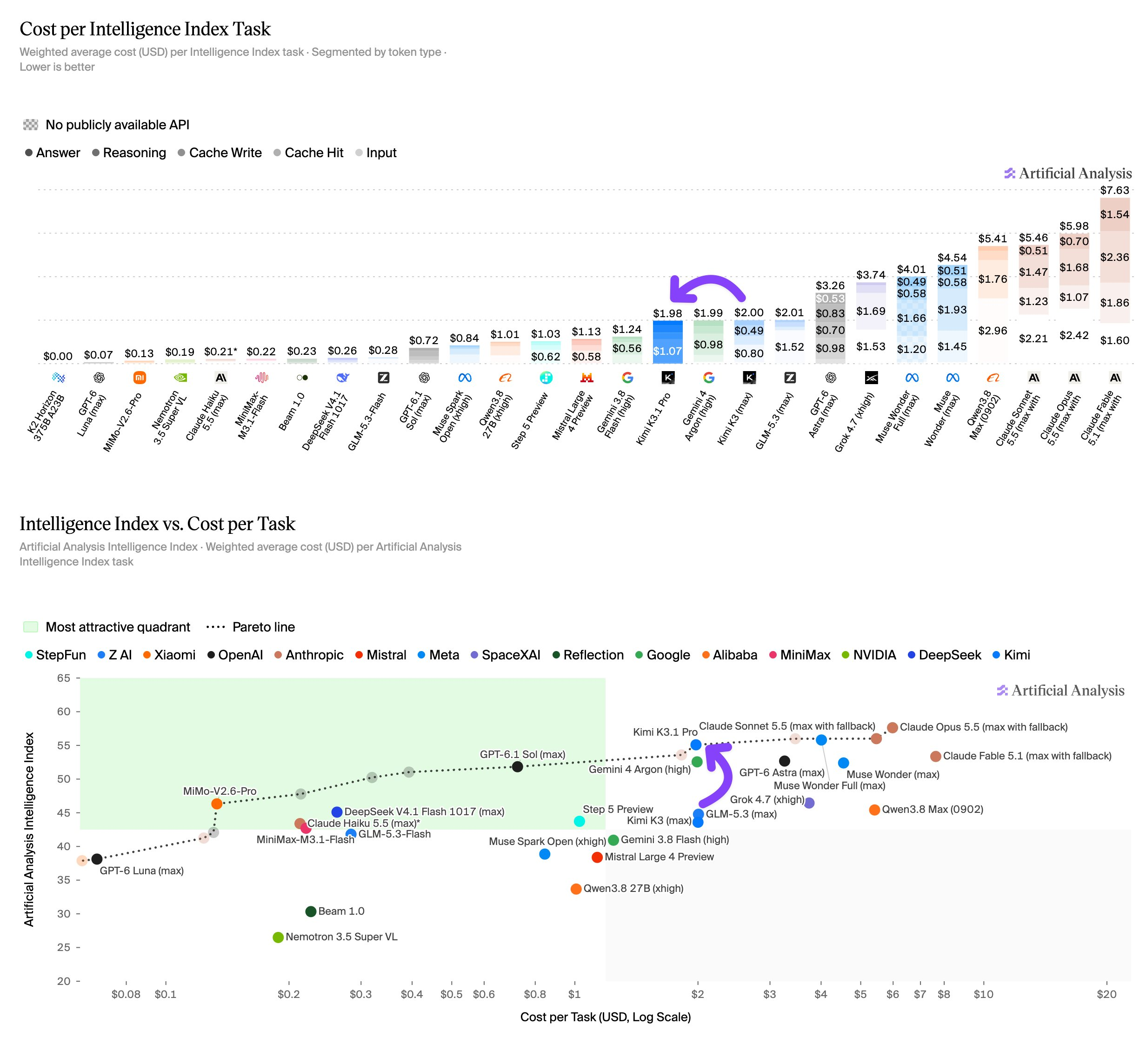
For a team automating a recurring task, holding the text volume fixed can answer a different question from holding the requested result fixed. The first estimates a unit-price saving; the second captures additional reasoning, longer answers and repeated attempts.
Kimi’s billing guidance also separates pay-as-you-go API usage from Kimi memberships and Kimi Code. A developer price cut should not be read as a matching reduction in those subscription prices.
The model climbs closer to Claude in independent tests
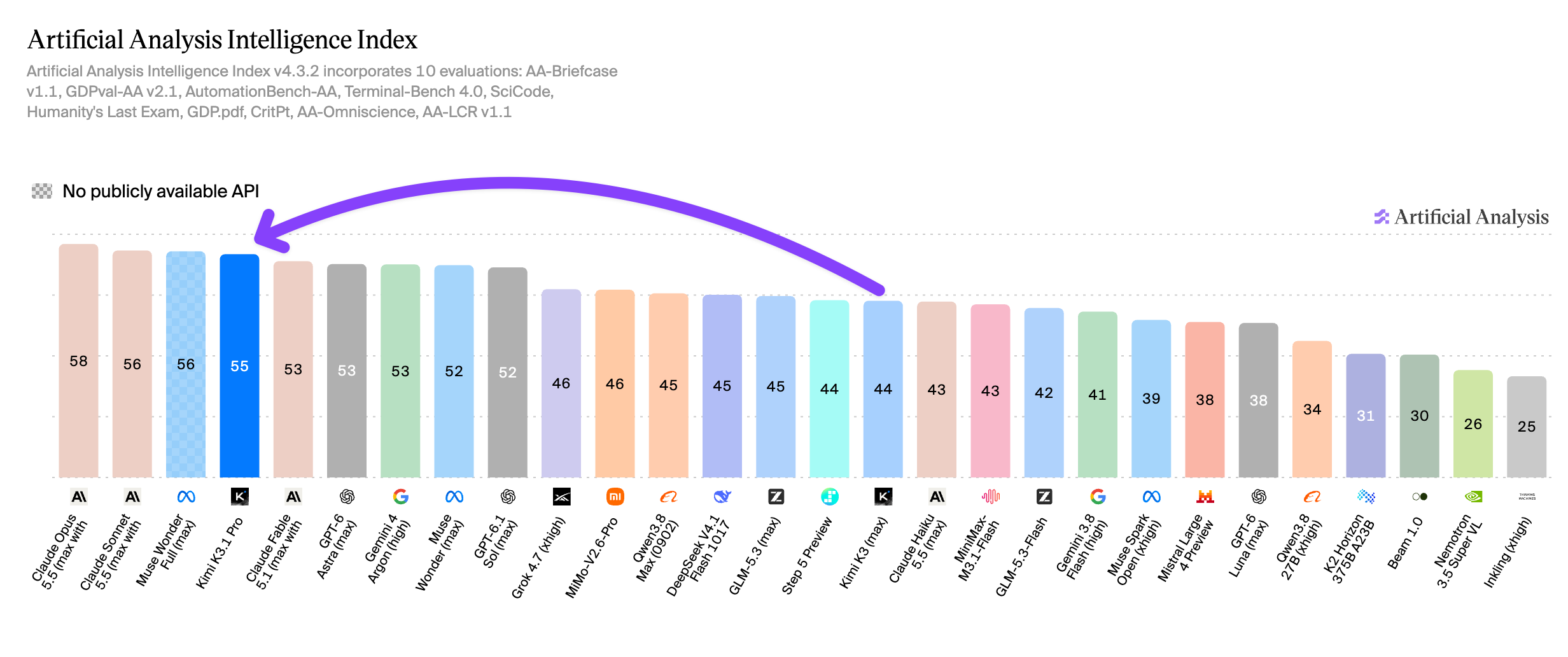
Artificial Analysis measured an Intelligence Index score of 55, up from 44 for Kimi K3. Claude Opus 5.5 scored 58, while Claude Sonnet 5.5 and Meta’s Muse Wonder Full scored 56 in the comparison. These test results do not forecast a particular company’s savings.
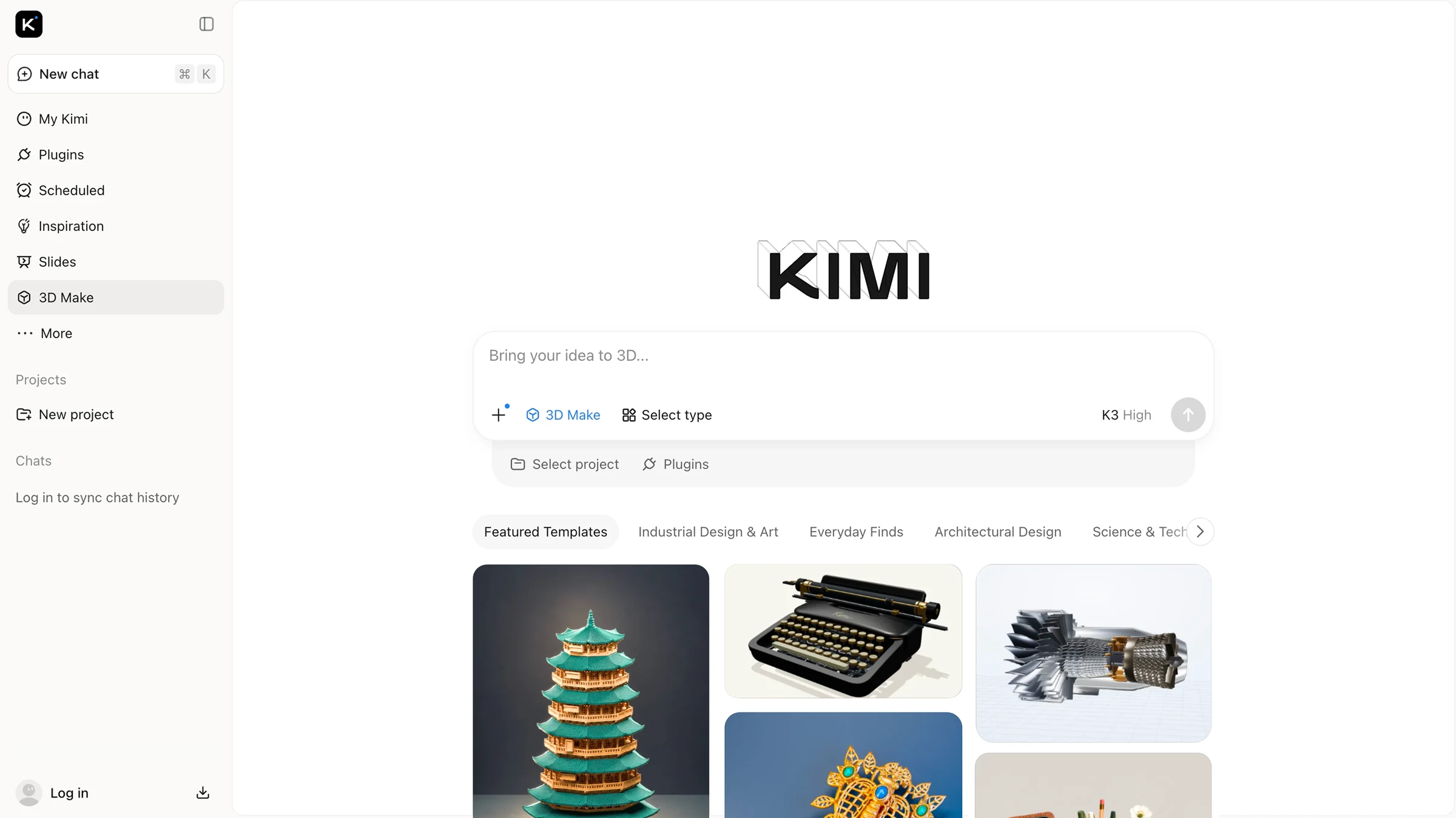
Moonshot includes a 3D Make feature for previewing, editing and exporting generated models. Its release instructions also say Kimi Enterprise administrators must enable K3.1 Pro for their organizations; access is off by default at launch.
Source: Artificial Analysis
Start the conversation by posting the first comment