

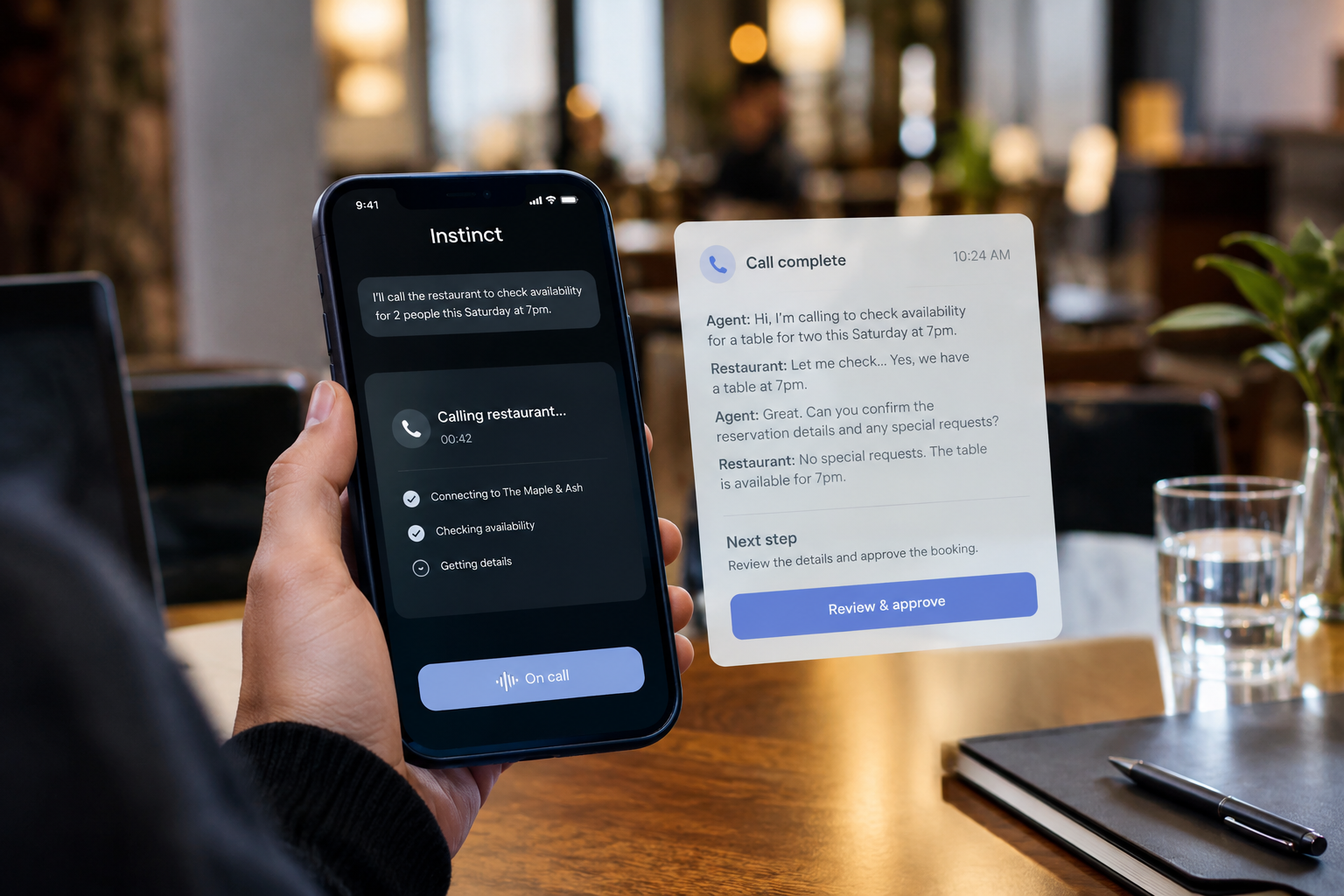
Instinct has raised $1 billion in new funding as the AI company expands its personal agent beyond digital tasks and into real-world errands, including making phone calls to businesses on a user’s behalf.
The funding values Instinct at $10 billion, according to Reuters. The company says its agent can help with tasks such as trip planning, groceries, tickets and cancelling subscriptions, while its Concierge service can call businesses that do not offer online booking.
For users, the more important question is what happens when an agent can actually commit them to something.
What can Instinct Concierge do?
Instinct announced its Concierge service earlier in September, describing an agent that can make phone calls and handle tasks such as restaurant reservations and joining a dentist’s cancellation list.
That moves the agent beyond finding information or preparing a recommendation. It can interact with another business and potentially create a real-world commitment.
That distinction makes the approval process important.
Bookings require user approval
Instinct’s task documentation describes a phone-only booking workflow in which the agent calls the business, reports what happened and does not commit to a booking without the user’s approval. The user is expected to review the details and confirm the booking and its terms before anything is agreed, booked or paid for. This example is based on a community report rather than an independently verified test.
For example, a user could ask the agent to call a restaurant that only accepts reservations by phone. The agent can establish whether a table is available and report back the proposed time and any relevant conditions. The user then decides whether to accept those terms.
This is an important distinction from giving an agent unrestricted authority to make bookings. A phone call could produce a different time, a deposit requirement or cancellation conditions that were not known when the task was started.
The agent still makes decisions
Instinct says it has added privacy and security measures including isolated sandboxes, short-lived local credentials and an active detection system designed to identify subtle hallucinations before the agent responds or executes an action. Those are company claims and not results from independent testing.
There have also been reports of users encountering unexpected behavior when agents interact with booking services. The Atlantic reported an example involving an apparent reservation made without the user’s intended approval, but this is an individual reported incident and not evidence of how Instinct generally behaves.
The same permission question is emerging across the wider agent market. For example, Amazon blocking Meta’s Muse shopping agent. This shows that an agent can have permission from its user but still encounter restrictions imposed by the service it is trying to use.
What the funding means for users
The $1 billion raise gives Instinct additional resources to expand its agent, but the more significant change for users is the widening range of actions it can attempt on their behalf.
As AI agents move from researching tasks to carrying them out, the useful question is no longer simply what an agent can do. It is which actions require approval, what information the user sees before approving them, and what happens when the agent gets something wrong.
That is where Instinct’s approval-first approach will matter in practice as Concierge expands.
Start the conversation by posting the first comment