

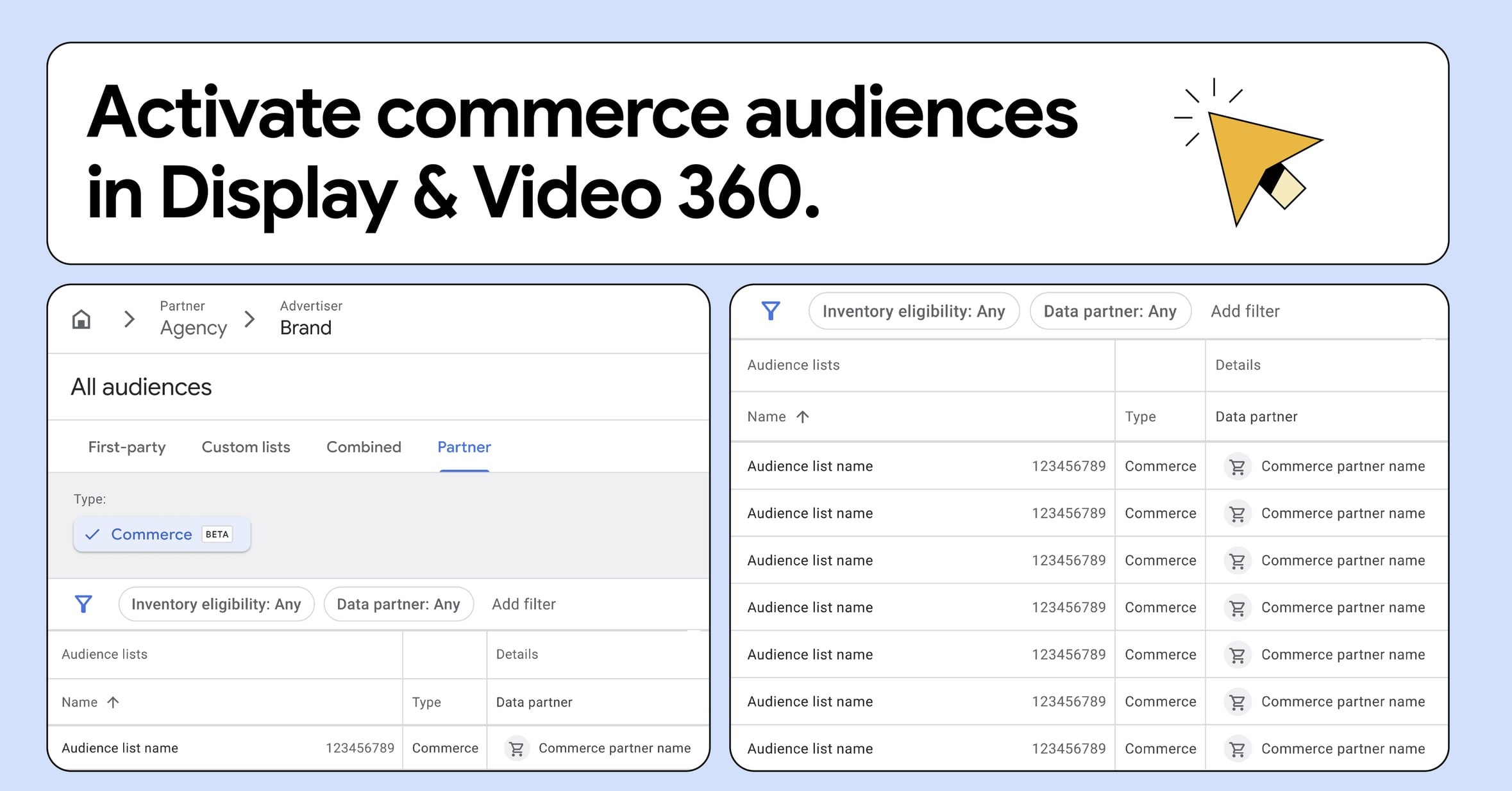
Google has published instructions for “commerce audience sharing through Google Ads.” The feature lets retailers and marketplaces share first-party data segments with brands and sellers. In plain English, a retailer can let a brand target people from the retailer’s own shopper data.
Google says campaigns using the shared audience must send traffic back to the commerce partner’s website. The audience can be used in Performance Max, Search, Standard Shopping, Demand Gen and Video campaigns, but the brand cannot send that audience wherever it chooses.
Search Engine Roundtable reported the new help document. Google’s broader Commerce Media through Google Ads documentation says the program is limited to participating merchants. Interested brands must contact their commerce partners or Google Ads account team.
How Google Ads audience sharing works
The retailer must link the brand’s Google Ads account to its Google Ads data-sharing account and Merchant Center account. Once approved, shared segments appear in Audience Manager with a “Shared” badge. Brands can add them to eligible campaigns and combine them with their own first-party data.
The retailer controls which segments are shared and can specify the approved campaign domain. Google says retailers receive impression, click, conversion and spend metrics from partner campaigns. Brands receive audience details, product information and conversion data from the retailer’s website.
Google’s campaign setup instructions add several practical restrictions. Campaigns need at least 10 approved SKUs. Google recommends a campaign duration of at least 30 days and a daily budget of $40 or more. Final URL expansion and text customization must remain disabled.
The retailer keeps the destination
The brand gets a retailer’s shopping signal and conversion feedback, but not a portable audience it can activate elsewhere. The retailer decides which audience is available, approves the domain and configures the purchase and add-to-cart goals.
That may suit sellers already dependent on a marketplace. A direct-to-consumer brand would need to decide whether the retailer’s conversion data is worth giving up control of the destination.
Google is connecting retailer audiences, product feeds and purchase reporting to brand-funded campaigns across its advertising surfaces. The setup is useful where the retailer owns the conversion path, but it is not a replacement for a brand’s own Customer Match or remarketing audiences. Google does not publish a list of participating merchants, so availability remains a partnership question rather than a setting most advertisers can switch on.
Start the conversation by posting the first comment