
Google introduces Business Agent in YouTube ads that answer back
The U.S. beta lets shoppers ask product questions inside YouTube ads. It starts with eligible Demand Gen campaigns, a $10-a-day minimum and no Shorts placements.

The U.S. beta lets shoppers ask product questions inside YouTube ads. It starts with eligible Demand Gen campaigns, a $10-a-day minimum and no Shorts placements.
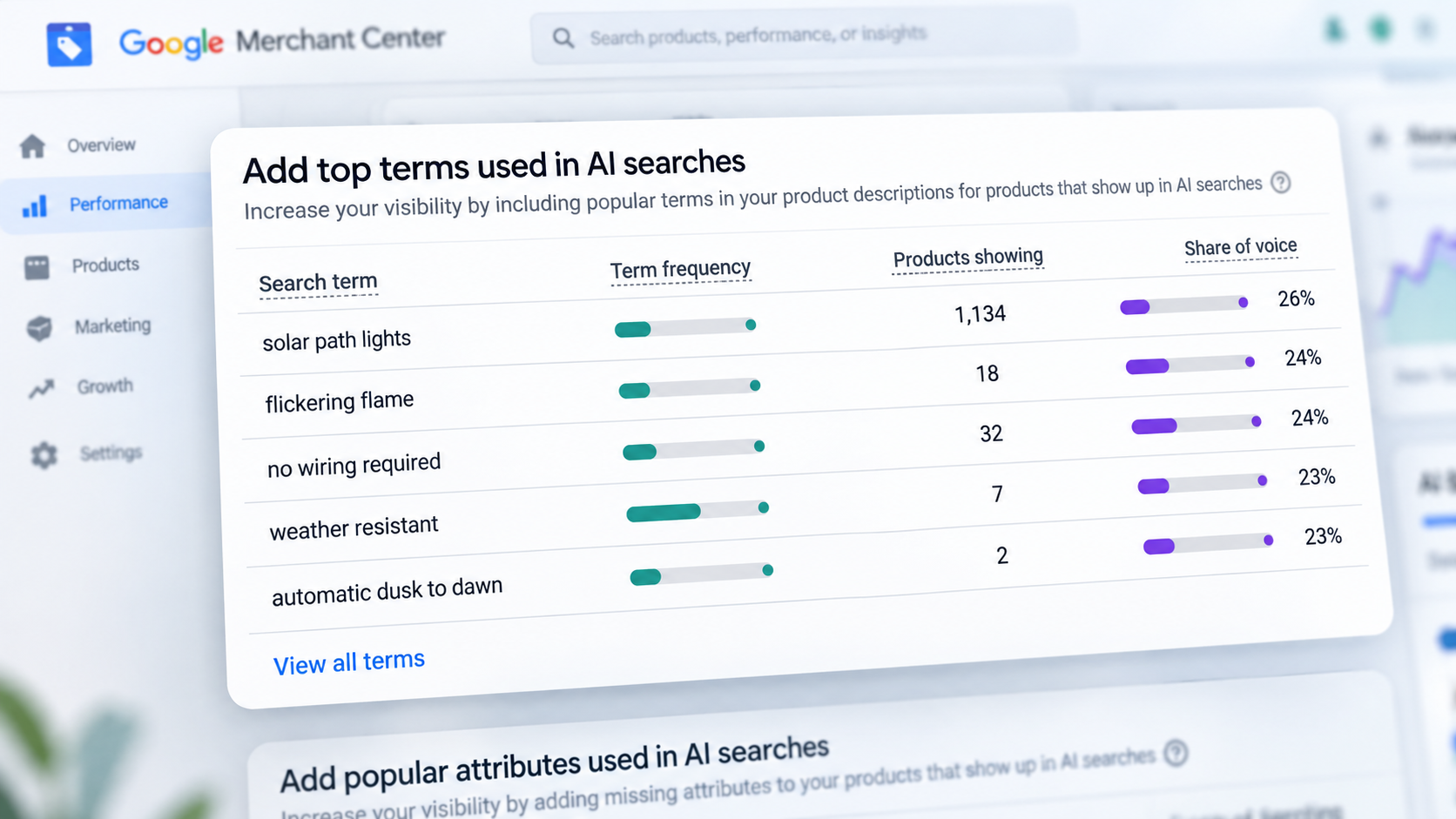
Google is testing Business Agent inside YouTube ads, allowing viewers to ask about products without leaving YouTube for a retailer’s website. The September 16 announcement also expands Merchant Center’s AI shopping reports and adds capabilities to Google’s checkout integrations.
For advertisers, the experiment puts some of a product page’s sales work inside the advertisement. A viewer could get answers about specifications or shipping while deciding whether the product deserves further attention. Google describes the intended result as more qualified traffic; its beta application provides no performance results to substantiate that promise yet.
Google’s beta registration form spells out restrictions that its broader announcement leaves out. Retailers need an active Demand Gen campaign linked to Merchant Center product feeds, with a minimum of $10 a day. The test covers English-language, mobile in-stream ads in the United States. Shorts are excluded.
Google says its team will enable the experience on existing eligible campaigns without additional setup. Applying does not guarantee participation; advertisers will receive confirmation if they are accepted.
There is also a campaign-selection detail worth checking before signing up. The form says all linked Demand Gen campaigns will be included unless advertisers specify individual campaigns. Agencies planning a controlled trial should make that selection deliberately.
Business Agent itself was announced in January as a branded shopping assistant in Google Search. The YouTube test extends that existing product into video advertising. Google’s documentation describes the Search version as using Gemini models, Merchant Center information and the retailer’s website to answer shoppers’ questions.
Alongside the advertising test, Google is making AI performance insights generally available in Merchant Center. The report covers accounts in Australia, Canada, India, New Zealand and the United States, with data limited to English-language shopping queries.
Retailers can find it under Analytics → Products → AI performance. It compares a brand’s visibility with its Merchant Center competitor set, using AI impressions and breakdowns for discovery, evaluation and ready-to-buy searches.
The important restriction for advertisers is that it covers organic AI results, including free listings, in AI Mode and AI Overviews. Paid advertising is excluded, so this dashboard cannot establish whether a YouTube Business Agent campaign is working.
There is another detail to catch before a visibility score reaches a client presentation: Google says share of voice can show 100% when Merchant Center has no defined competitors available. A zero can also reflect insufficient impressions. Neither number should be interpreted without checking the underlying data.
Google is also updating the Universal Commerce Protocol, or UCP, integration hub in Merchant Center. Merchants using the hub can enable cart transfers to their websites and enhanced checkout-flow testing. Analytics and further capabilities are still described as coming soon. The additions are rolling out gradually in the U.S., with Australia and Canada expected to follow in early 2027.
Tapestry supplied a concrete example of UCP adoption in its own September 16 announcement. The company says U.S. shoppers can now purchase Coach and Kate Spade products directly through Google Search, including AI Mode, and the Gemini app. Its implementation supports single-item checkout through Google Pay, with explicit customer approval required for each transaction.
Those checkout integrations should not be confused with the YouTube experiment. The beta form describes answering product questions and delivering traffic to merchants; it does not announce purchasing inside the ads.
For retailers considering the test, Google’s documentation suggests a practical starting point: check the product information the assistant will use. The existing Search version draws from Merchant Center and the company’s website, making both relevant to the quality of its answers.
Google’s optional conversational attributes provide another way to supply detail. They support product questions and answers, document links, related products and variant information. Merchants can add them through a supplemental feed, their primary feed or the Merchant API. Google also says information already supplied in descriptions, product highlights or product details does not need to be duplicated.
Product demonstrations deserve attention too. SEW recently covered Merchant Center’s product-level video option; Google’s specification allows videos that show an item from different angles or demonstrate it in use. That gives retailers a concrete way to explain details that a static product image may leave unresolved.
The useful test would examine whether the assistant answers buying questions correctly and whether the campaign produces additional profitable orders. For a footwear retailer, that could mean auditing sizing guidance and comparing completed purchases and returns against a suitable control. For an electronics seller, compatibility answers would deserve particular scrutiny.
Google is offering advertisers another place to persuade a customer. Before expanding the experiment, retailers should establish whether they are paying for better sales conversations—or simply giving their product-data mistakes a more convincing voice.
Conversation
Comments are reviewed before they appear. Be kind, be useful.