
OpenAI’s Sponsored Agents turn ads into chats—and could reshape paid search
The limited US pilot lets shoppers question a business-sponsored AI agent before visiting the advertiser’s website.

The limited US pilot lets shoppers question a business-sponsored AI agent before visiting the advertiser’s website.
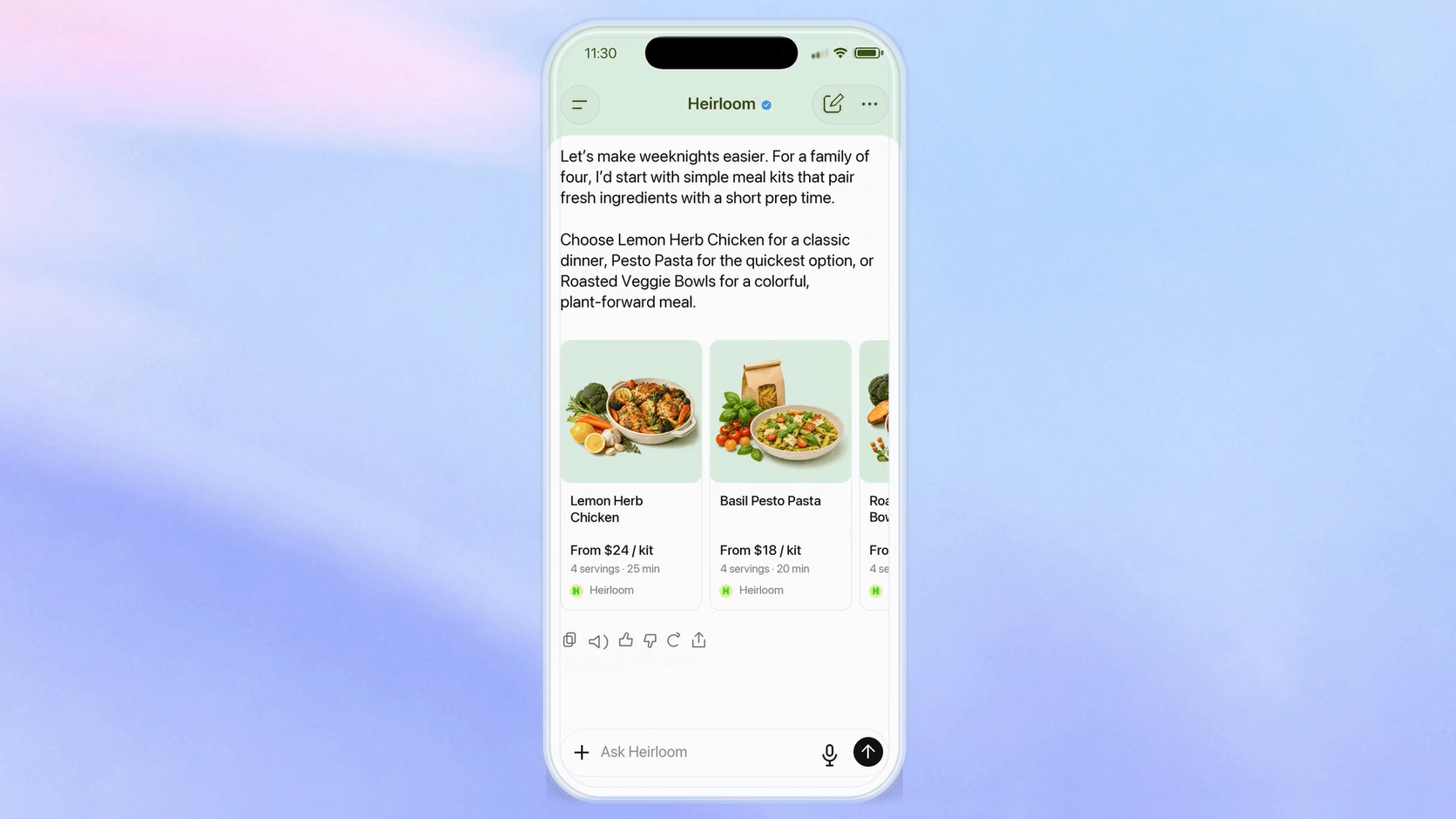
OpenAI is testing Sponsored Agents, a ChatGPT advertising format that lets people click an ad and start a conversation with an AI representative of the business. The company announced the pilot on September 16, with select US advertisers participating.
For paid-search teams, the potential change is where the persuasion happens: an advertiser could answer a prospective customer’s questions before getting them onto its website.
OpenAI illustrates the format with a dining-table shopper asking about size, seating and maintenance. Users can explain their needs, ask follow-up questions and visit the business’s website when ready.
The sponsored exchange is labeled and kept separate from both the user’s original conversation and ChatGPT’s independent answers, according to OpenAI.
That also distinguishes it from the existing Ask ChatGPT option on ads. That feature shares an ad with the regular assistant so the user can ask about it; OpenAI says advertisers cannot influence those responses. A Sponsored Agent represents the business being advertised.
For users, the distinction matters. Asking an independent assistant whether a product is worth buying carries a different expectation from questioning the seller’s representative, even when both exchanges happen inside ChatGPT.
OpenAI’s advertising FAQ also distinguishes private chats from messages directed to businesses. Advertisers cannot read users’ private ChatGPT conversations, but they can see messages users choose to send them directly through an ad.
There is a consequential detail in OpenAI’s Ad Tools Terms: even when OpenAI creates or configures a Sponsored Agent, the advertiser remains responsible for its content, configuration, actions and output “as if you had created it yourself.”
For a marketing team, that means the review process should extend beyond approving a headline and landing page. A useful pre-launch test would probe how the agent handles outdated offers, unclear product specifications and requests for promises the business cannot make.
Consider a shopper asking whether a product will arrive before a particular date. An agent that confidently invents a delivery commitment could undermine an otherwise successful campaign. Checking how it handles missing information would be as important as checking whether its answers sound persuasive.
Agencies evaluating the format would therefore have another potential responsibility: testing the sales conversation on the client’s behalf, including the answers the client would rather the agent did not improvise.
OpenAI’s announcement does not provide Sponsored Agents conversion results, format-specific pricing or a date for wider availability.
The commercial argument will need more than evidence that people enjoy asking questions. An advertiser would need to establish whether those exchanges produce additional sales or qualified leads at an acceptable cost.
A campaign could plausibly generate fewer website visits while sending through better-informed buyers. It could also introduce an unnecessary step for someone already ready to purchase. Those possibilities call for measurement across the conversation, the subsequent visit and the eventual outcome—not a success claim based on chat starts alone.
For search marketers, that is the experiment worth watching. Sponsored Agents could expand campaign optimization into the answers given after the click. Whether that earns them a meaningful share of paid-search budgets will depend on how often the conversation leads to business.
Conversation
Comments are reviewed before they appear. Be kind, be useful.