

Google’s Ads Transparency Center shows you what competitors are running on Search, YouTube, Maps, Google Play and Google Shopping. You won’t see what the company spent, how the ads performed or who exactly was targeted. But you can see something competitors normally make surprisingly difficult to study: the ads themselves. And you don’t need a Google Ads account to see what your competitors are doing.
I tested it with three companies competing for roughly the same customer: Beehiiv, Mailchimp and Flodesk. On September 17, 2026, I searched for all three advertisers in the United States and compared the ads visible on Google Search and YouTube over the previous seven days.
Then I looked at four things: how many ads each company was running, what those ads said, what they offered and what they asked potential customers to do.
Here’s how to do the same with your competitors, and what you can actually learn from it.
How to see a competitor’s Google Ads without an account
- Open Google’s Ads Transparency Center (adstransparency.google.com). No login is required.
- Search for the advertiser or brand name.
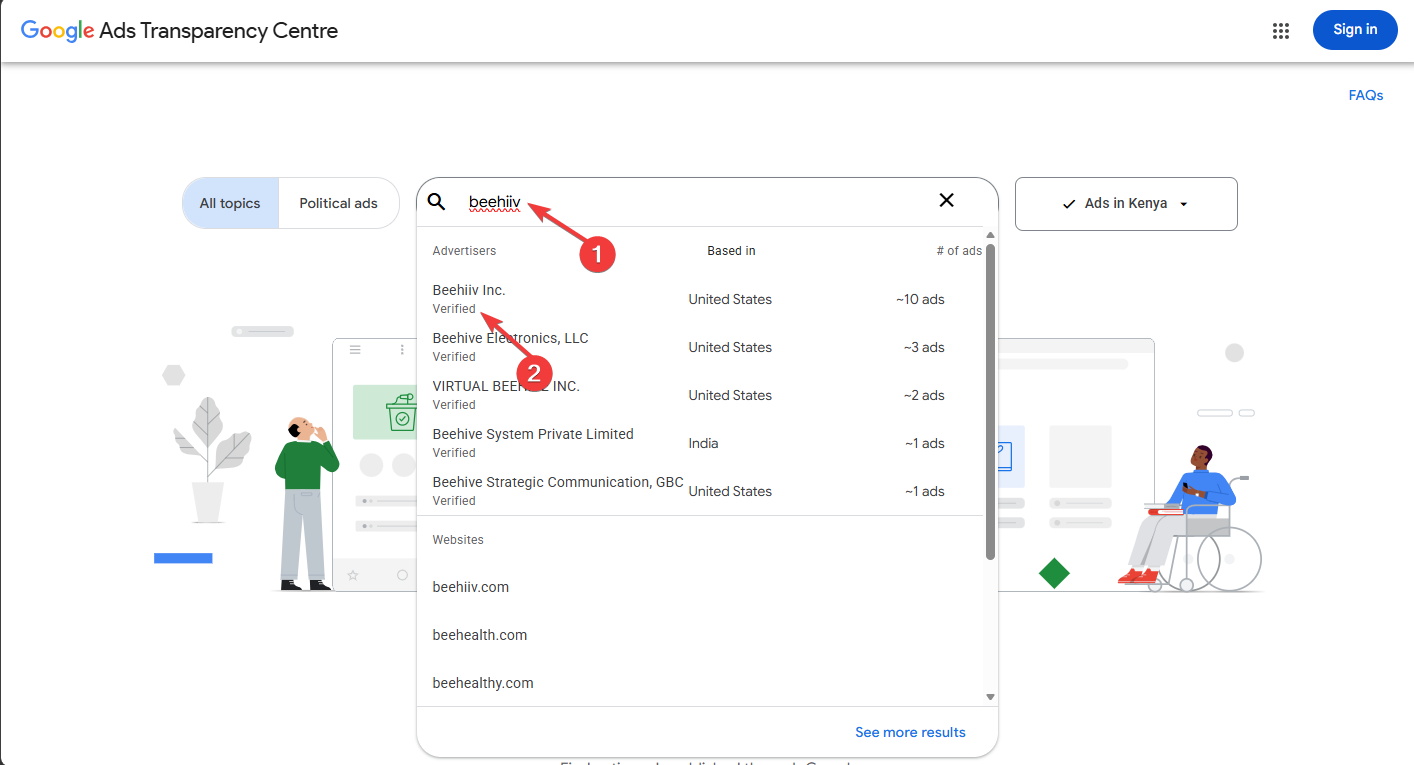
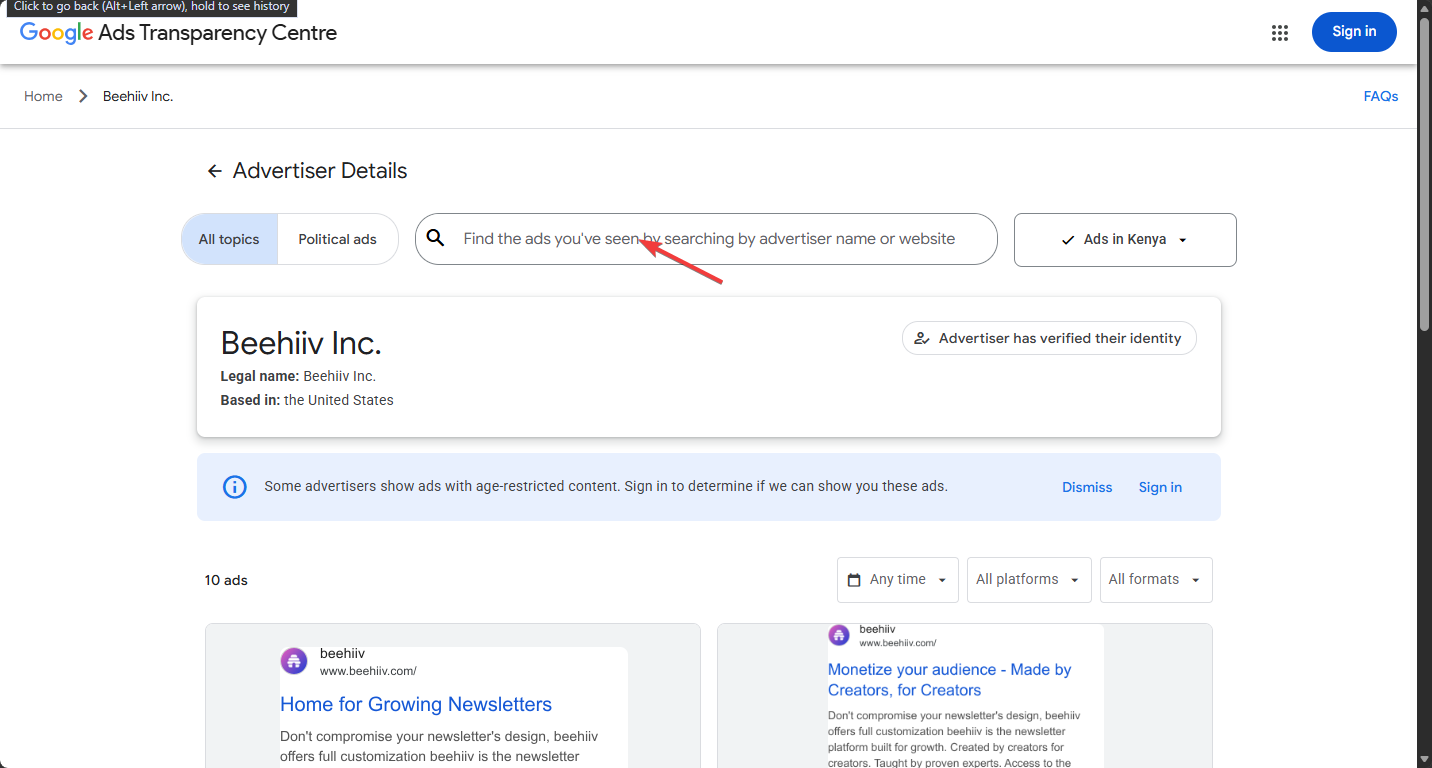
- Select the correct verified advertiser. Similar names are common, so check that the advertiser matches the company you mean.
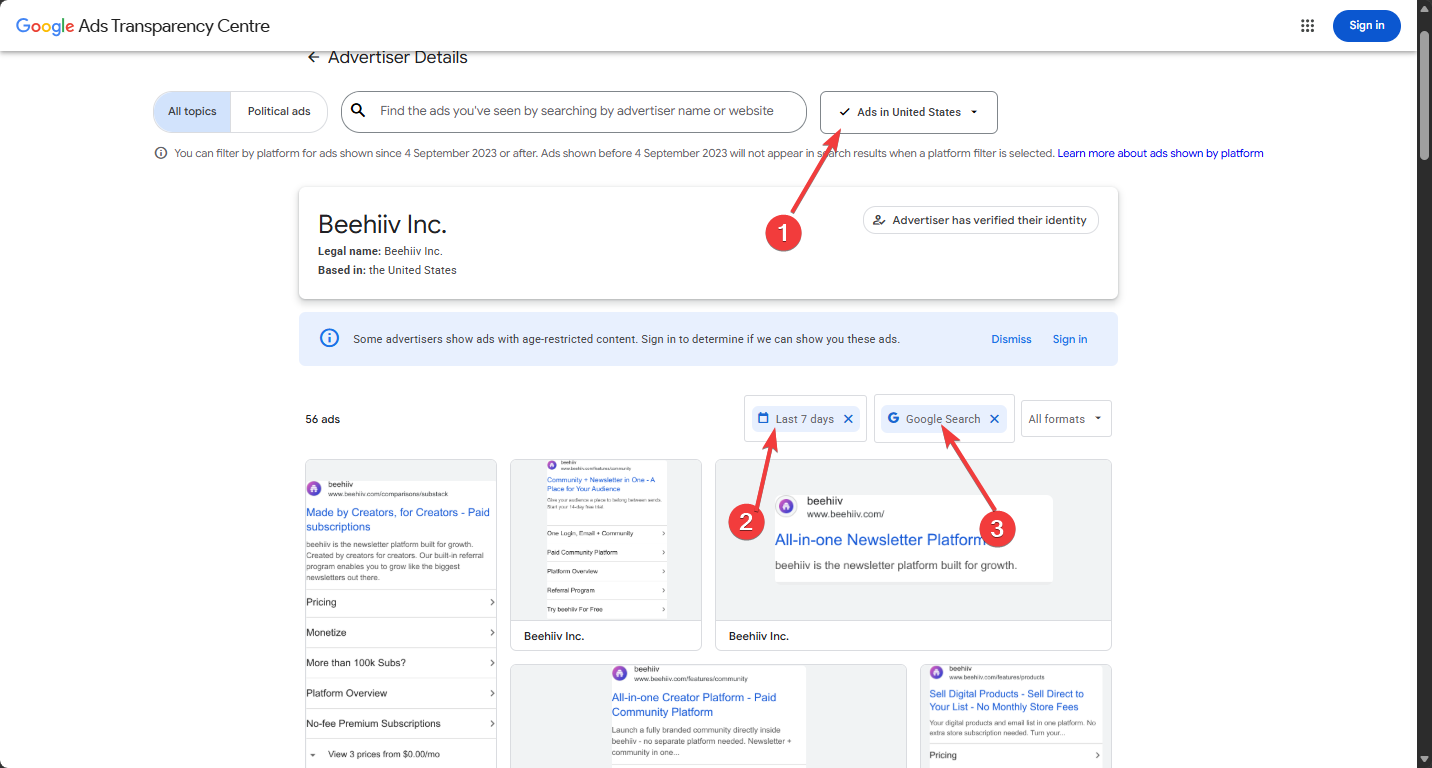
- Set the country, date range and platform filters. I used the United States, the last seven days, and Google Search and YouTube in turn.
- Review the visible ads and note recurring messaging, offers, formats and calls to action.
What can you learn from a competitor’s ads?
I focused on Search and YouTube because those were the platforms where all three advertisers had visible ads during the same seven-day window. For each one, I compared four things:
- Ad volume: how active each advertiser was
- Messaging: which themes the ads lean on
- Offer: what the ads promise you’ll get
- CTA: what the ads ask you to do next
1. Ad volume
| Advertiser | Google Search | YouTube |
|---|---|---|
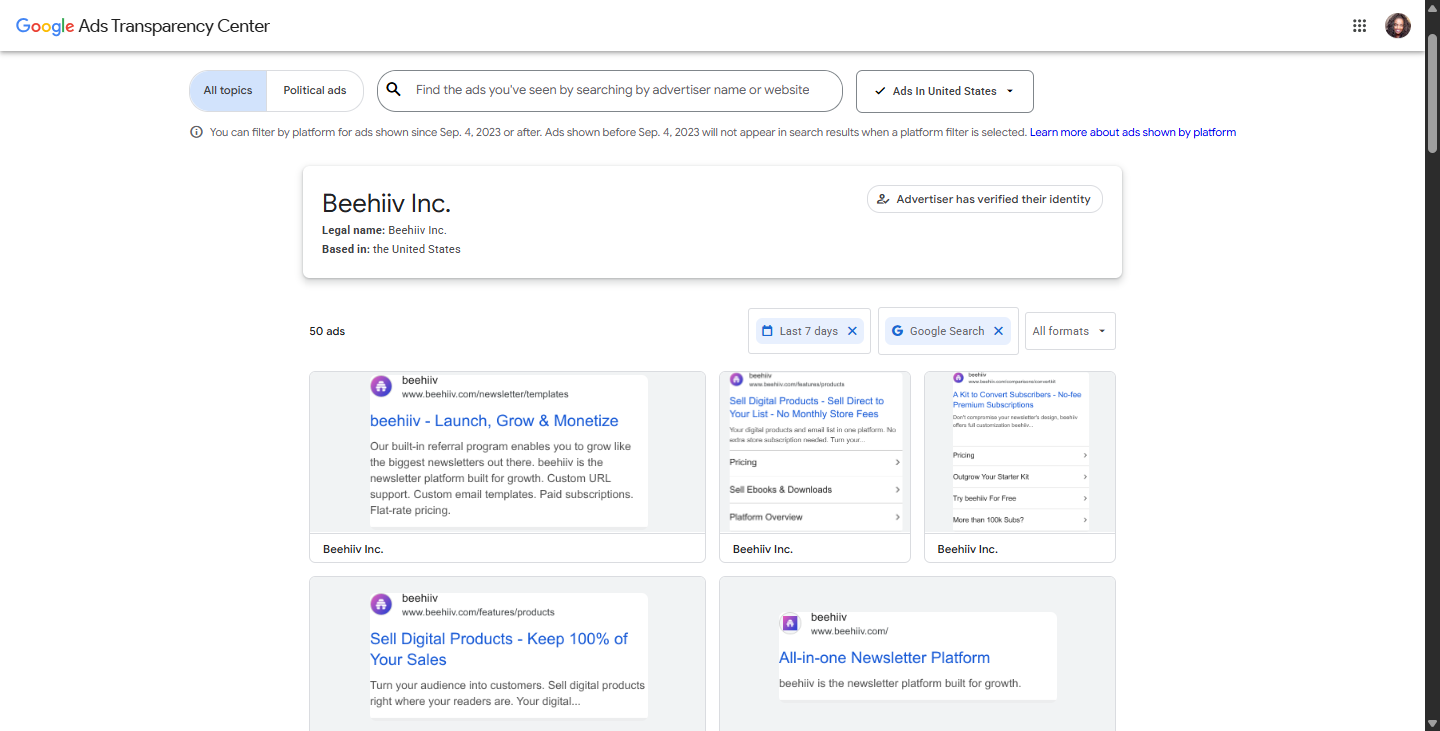
| Beehiiv | 50 | 83 |
| Mailchimp | ~200 | ~200 |
| Flodesk | 54 | 1 |
A disclaimer before we interpret the results, this is a rough activity signal, not a measure of spend or performance. Mailchimp showed the highest counts on both platforms. On Search, Beehiiv (50) and Flodesk (54) were close together; on YouTube, Beehiiv’s 83 was well behind Mailchimp’s ~200, and Flodesk had a single ad.
One caveat on Mailchimp’s YouTube number: the ads I reviewed on a single results page under its advertiser account were for third-party content, not Mailchimp’s own product. That makes its YouTube volume hard to read, so I left those ads out of the messaging comparison below. The lesson is worth remembering when you run this yourself: check what an advertiser is actually promoting before you count its ads.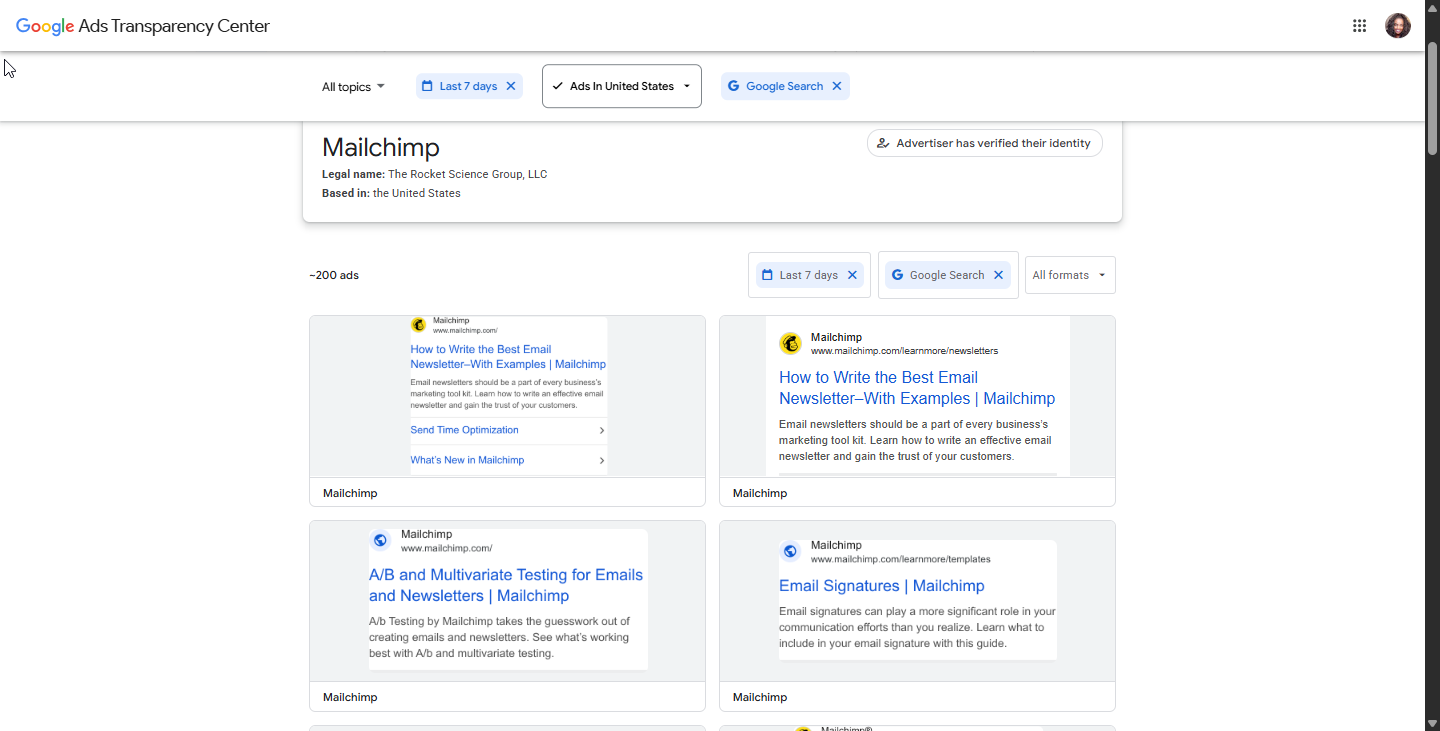
This exercise shows you which platforms a competitor is visible on and which it isn’t, not how much it’s spending or how well it’s doing.
2. Messaging
| Theme | Beehiiv | Mailchimp | Flodesk |
|---|---|---|---|
| Growth | Search, YouTube | – | – |
| Revenue generation | Search, YouTube | – | – |
| Features | – | Search | – |
| Design | – | – | Search, YouTube |
| Ease of use | – | – | Search, YouTube |
| Education | – | Search | – |
| Testing | – | Search | – |
The clearest contrast is Beehiiv versus Flodesk. Beehiiv’s Search headlines sell a business outcome: Launch, Grow & Monetize and Keep 100% of Your Sales. Flodesk sells the experience of making emails Beautifully designed emails and Create emails in 5 minutes. Mailchimp’s Search ads sit somewhere else again, leading with education and product capabilities, such as How to write the best email newsletters-with examples, A/B and Multivariate Testing for Emails and Newsletters, and Email Signatures.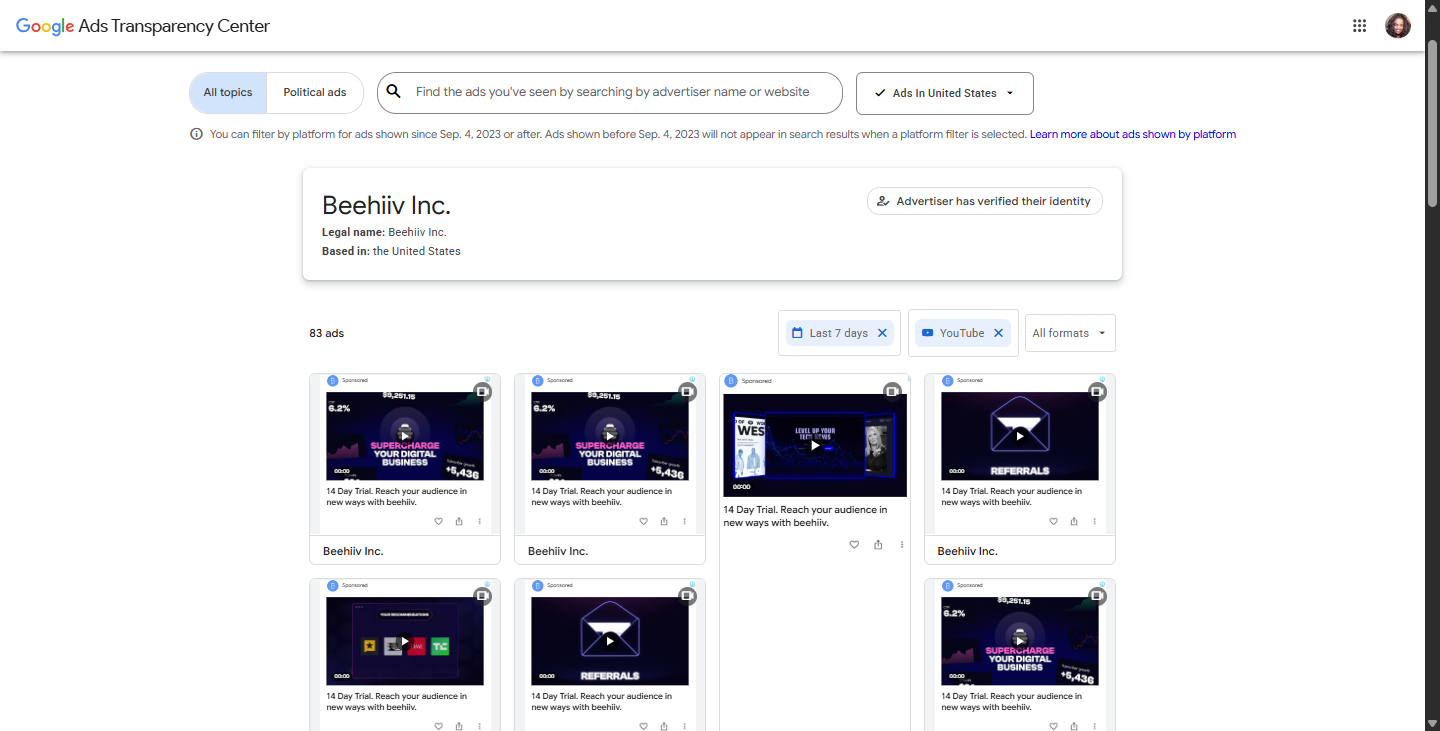
Beehiiv’s YouTube creative message stays on the growth theme, with thumbnail text saying Supercharge your digital business and Referrals. Flodesk’s single YouTube ad reused the visuals from its Search campaign, so its message stays consistent across both platforms. On YouTube, Mailchimp had a number of ads but of the ads reviewed on a single results page, none were from Mailchimp but from third-party content.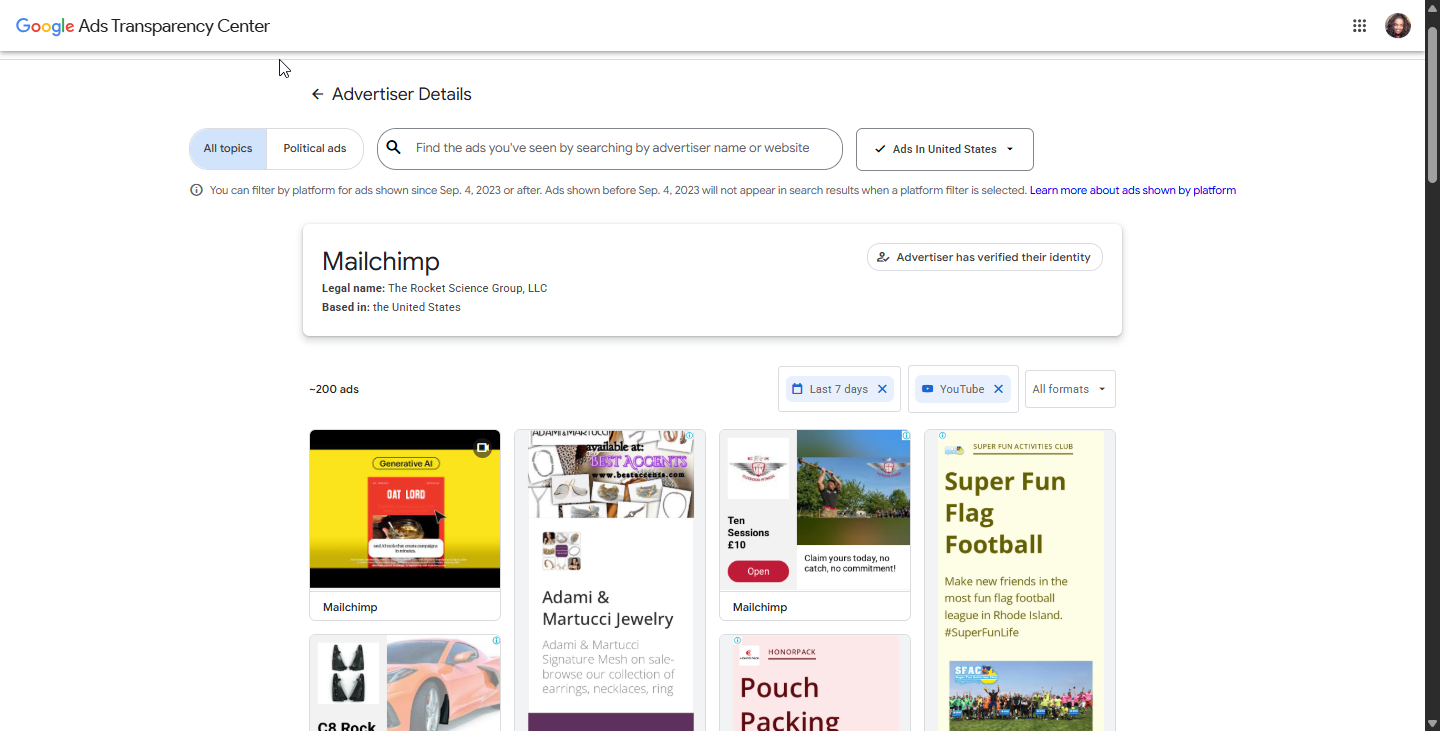
From these messages, you can learn which value claim a competitor leads with and emphasizes on.
3. Offer and value proposition
- Beehiiv: This translates to audience growth and revenue generation. You can launch, grow and sell digital products, and keep 100% of your sales. For Youtube ads, they reiterate the same message on revenue generation and will give you a 14-day free trial to test and see whether there’s value in all they are offering.
- Flodesk: Offers you free designs and ease of use. You get attractive emails without designing templates from scratch.
- Mailchimp: Offers plenty of features, education and a free-plan entry point. Its ads offer guides, examples, templates and a free plan you can upgrade from.
Here, you can learn the reason a competitor gives customers to choose them over you.
4. CTA
Each brand pushes a different conversion path. Beehiiv’s YouTube ads repeat a 14-day trial, a low-commitment way to test the product. Mailchimp’s Search ads ask you to pick a free or paid plan. In the Flodesk ads I reviewed, there was no explicit CTA pointing to a trial. From these CTAs, you can learn how a competitor moves someone from ad to sign-up, and how much commitment they are asksing for up front.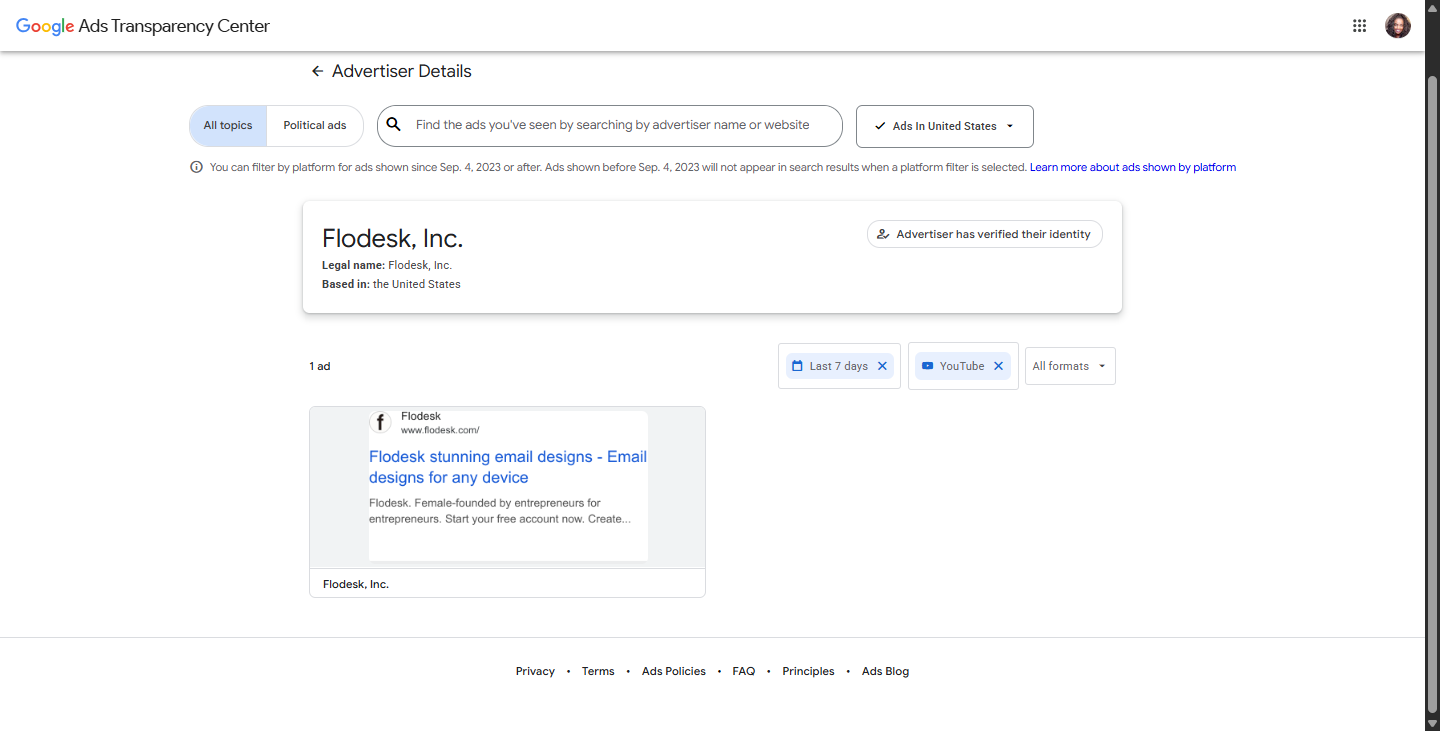
What Google won’t show you
The Ads Transparency Center shows the ads, not the results behind them. It doesn’t show spend, conversions, profitability, exact targeting or reliable performance data. So none of the numbers above tell you which campaigns worked. Ad count in particular is not a measure of the budget in place, reach, aggressiveness or success.
What to take from this exercise
All three companies are chasing the same pool of customers, yet each leads with a different value proposition. Beehiiv’s ads talked almost exclusively about growth and monetization, positioning itself as a business tool rather than just an email sender. On YouTube, the ads spoke directly to a prospective customer. Flodesk stayed narrowly focused on design and ease of use, with barely any YouTube presence at all. Mailchimp, meanwhile, split its Search messaging into education and features but its YouTube volume was dominated by other product ads.
For a marketer positioning a competing product, the message themes reveal a map of open territory as much as it is competitive intel. You can enter the market and differentiate your product/services based on value instead of fighting over the same marketing messages. To apply it to your own competitors, you can run the same search, note the volume, messaging themes, offers and CTAs, and look for what nobody is saying.
Start the conversation by posting the first comment