

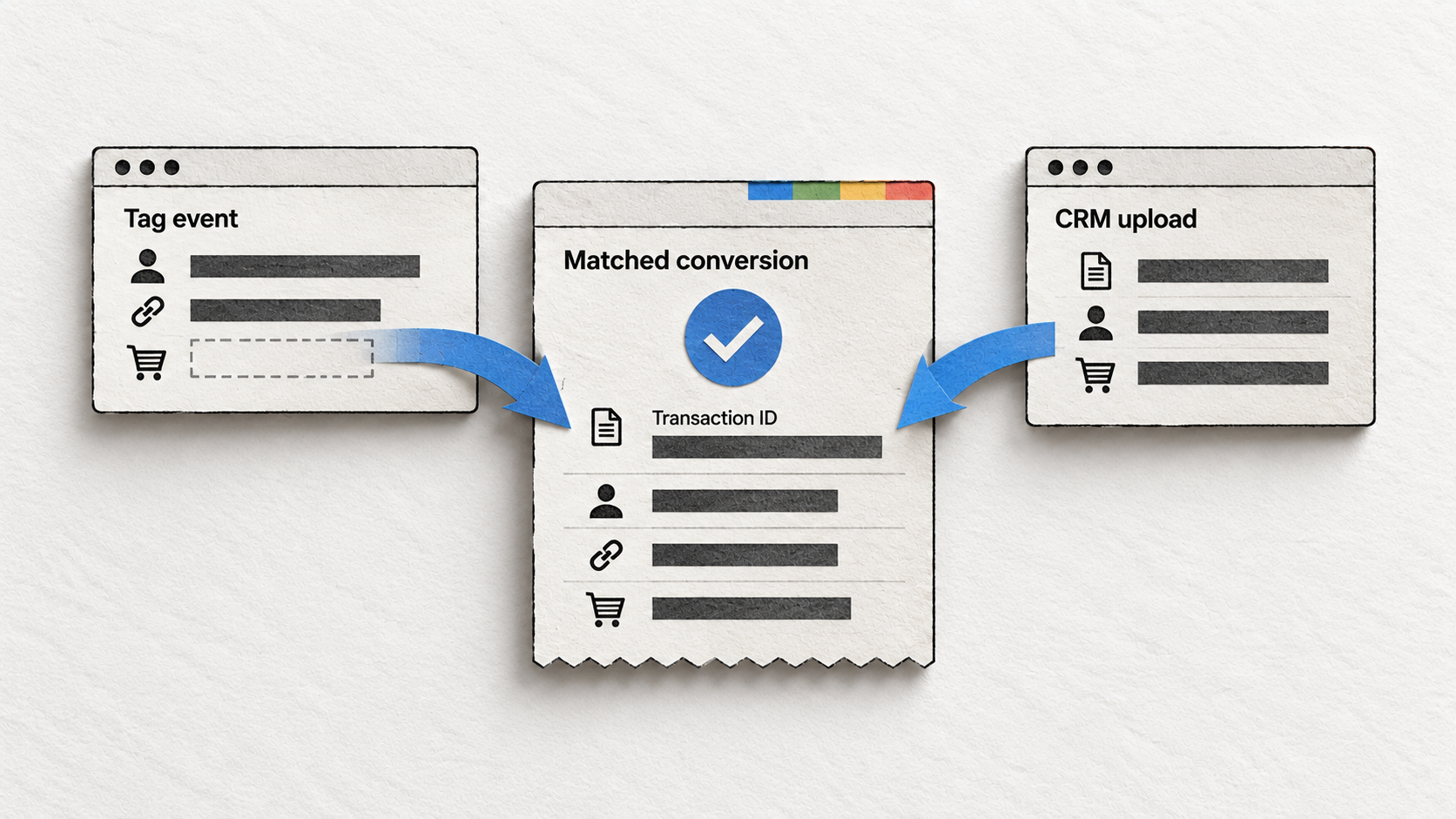
Google Ads is documenting a beta feature that lets advertisers supplement website conversion tags with offline data from backend systems such as CRMs and order databases.
The feature, called multi-source conversions, connects an existing Google tag web conversion with an additional data source through Google Ads Data Manager or the Data Manager API. Search Engine Land first reported the new documentation.
Google says the setup can help advertisers “fill in any potential gaps” in conversion measurement by combining tag-based website data with backend conversion records. The feature is currently in beta, so accounts may not see it yet.
How it works
The key field is the transaction ID.
Google uses the transaction_id to match an uploaded backend record with the conversion captured by the website tag, within the same conversion action. If the IDs match, Google can use the offline upload to supplement missing user-provided data, such as email or phone number.
That matters for enhanced conversions and Smart Bidding because tags do not always capture the full data payload. Browser restrictions, ad blockers, consent settings or tagging errors can leave advertisers with an incomplete conversion record.
Google recommends uploading the additional data as soon as possible, ideally within 24 hours of the conversion event.
Value updates can overwrite tag values
The beta also changes how conversion value corrections can work.
If the uploaded backend record has the same transaction ID as the tag event, Google says the uploaded conversion value becomes the source of truth and permanently overwrites the value originally recorded by the tag.
That could be useful for advertisers whose checkout value changes after the tag fires, such as refunds, upsells, cancellations or final basket reconciliation.
It also creates a very obvious risk: bad uploads can poison reporting and value-based bidding. Google warns that currency units must match the tag format. For example, sending cents where the tag reports dollars can inflate conversion values.
Limits to know
Multi-source conversions are available only for website conversion actions set up manually with code through the Google tag or Google Tag Manager. Google says the feature is not available for imported Google Analytics conversions or URL-based conversion actions.
Google also warns advertisers not to create duplicate conversion actions that count the same sale. Deduplication happens within a single conversion action, not across separate conversion actions.
There is also a 14-day trial period. During that period, additional source data is used for reporting and diagnostics, but does not affect bidding. After the trial ends, valid uploaded data can flow into both reporting and bidding.
Our take
This is a useful fix for advertisers with messy but recoverable measurement, especially ecommerce and lead-gen accounts where the backend record is cleaner than the browser event.
The catch is operational, not conceptual. Multi-source conversions depend on clean transaction IDs, consistent value formatting and fast uploads. If those basics are wrong, the feature can create a more confident version of bad data.
For paid search teams, the practical check is simple: look at whether purchase or lead events have reliable transaction IDs across both the tag and backend system. If they do, this beta could make Google Ads conversion data less fragile. If they do not, the first job is still plumbing.
Start the conversation by posting the first comment